

 About Nagasaki
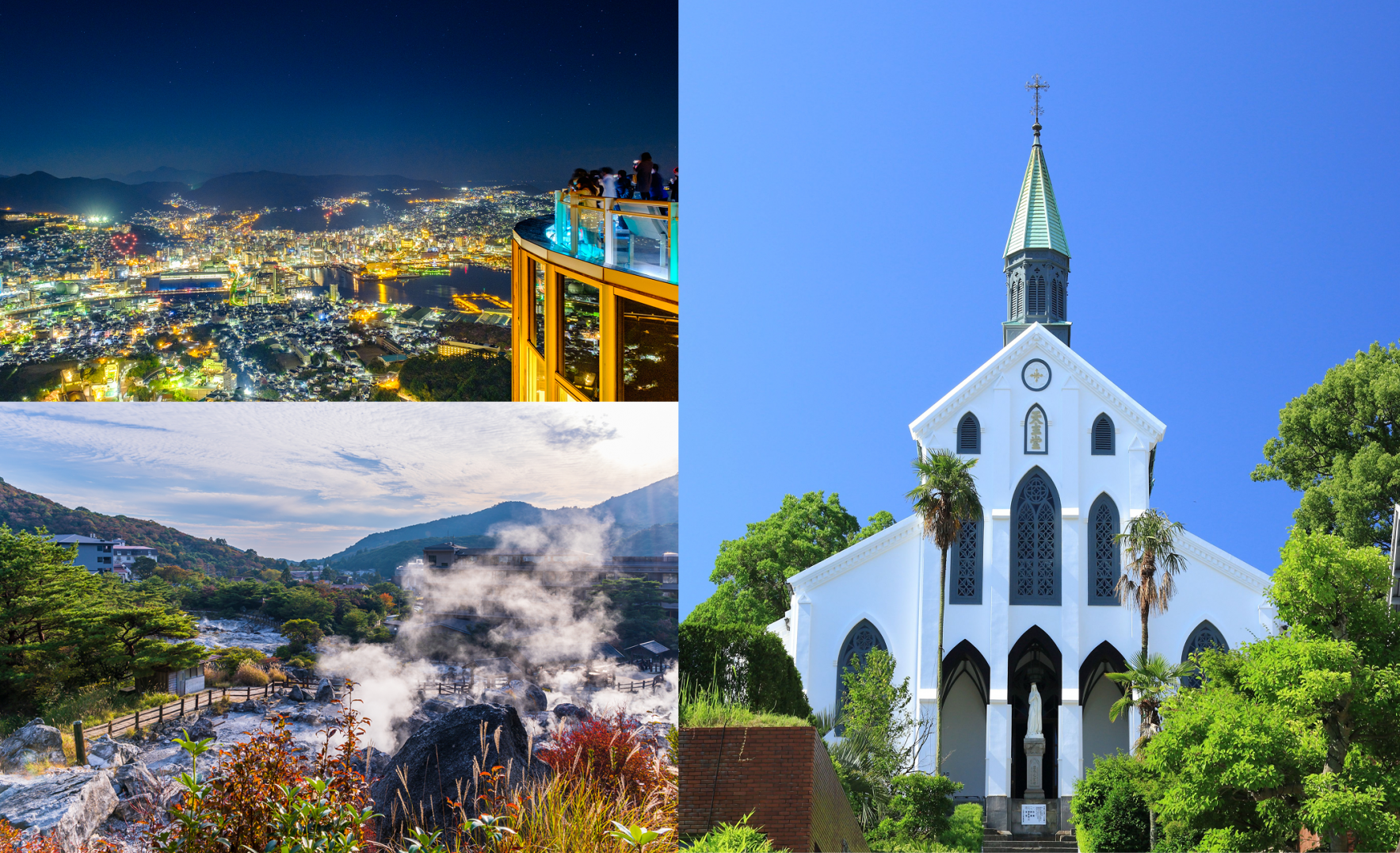
Everything you need to know for your first Nagasaki trip: Where to go, what to eat, access information, and more
We've brought together a wide range of information for visitors coming to Nagasaki for the first time: Nagasaki's history and geography, places to see, foods to try, and more. Reading all this information will help ensure that your first Nagasaki visit is a truly fulfilling experience, so take a good look and enjoy reading!
Overview
- What kind of place is Nagasaki?
- Nagasaki's World Heritage sites and other historical spots: Heritage for current and future generations
- Nagasaki's finest scenic spots
- Fun and exciting spots for couples and families
- Nagasaki: A unique opportunity to stroll through Japanese, Western and Chinese streetscapes
- Must-eat foods to try in Nagasaki
- Exploring other prefectures around Nagasaki
What kind of place is Nagasaki?
Nagasaki is a place of picturesque beauty. Located in the far west of Kyushu (an island in south-western Japan), it is enclosed by seas in three directions and boasts over 1,400 islands, more than anywhere else in Japan.
Nagasaki has served as a hub for international exchange with mainland Asia since ancient times, and during Japan's period of national isolation in the Edo Period (1603-1868), Nagasaki was the only place in the country where international trade was permitted. Due to this history, Nagasaki has long been the place where new cultural phenomena, technologies and foods have first entered Japan from Asia and Europe, and has played a key role in the modernization of the country. These cultural influences have had a profound impact all over Nagasaki Prefecture, visible even today in everything from streetscapes to festivals.
The Nagasaki region is also blessed with natural beauty. Visitors can revel in the sight of beautiful flowers in every season, enjoy cruising and marine sports in the clear blue sea, and get their fill of the freshest local produce that Nagasaki's oceans and mountains have to offer.
With each local area featuring so many different delights, Nagasaki is a place of endless appeal for visitors.
Nagasaki's World Heritage sites and other historical spots: Heritage for current and future generations
Nagasaki has long played a key role in Japanese history.
Today, the story of Nagasaki's development over the centuries is displayed at its two World Heritage Sites: "Hidden Christian Sites in the Nagasaki Region" (listed in 2018) and "Sites of Japan’s Meiji Industrial Revolution: Iron and Steel, Shipbuilding and Coal Mining," the places which supported the modernization of Japan in the Meiji Period (1868-1912).
The city is also home to many other facilities that offer opportunities to learn about Nagasaki history and culture, including Nagasaki's hopes for peace.
Here, we've grouped together some of Nagasaki's best sites, theme by theme; you can visit each group of sites in a single trip, tracing the path of Nagasaki's historical development.
Hidden Christian Sites in the Nagasaki Region
From the 17th century to the 19th century, Nagasaki's "hidden Christians" continued to keep their faith alive in secret in spite of the terrible persecution they faced due to Japan's ban on Christianity at this time. Visitors can explore some of the places connected with this history, and learn the story of the hidden Christians.
-
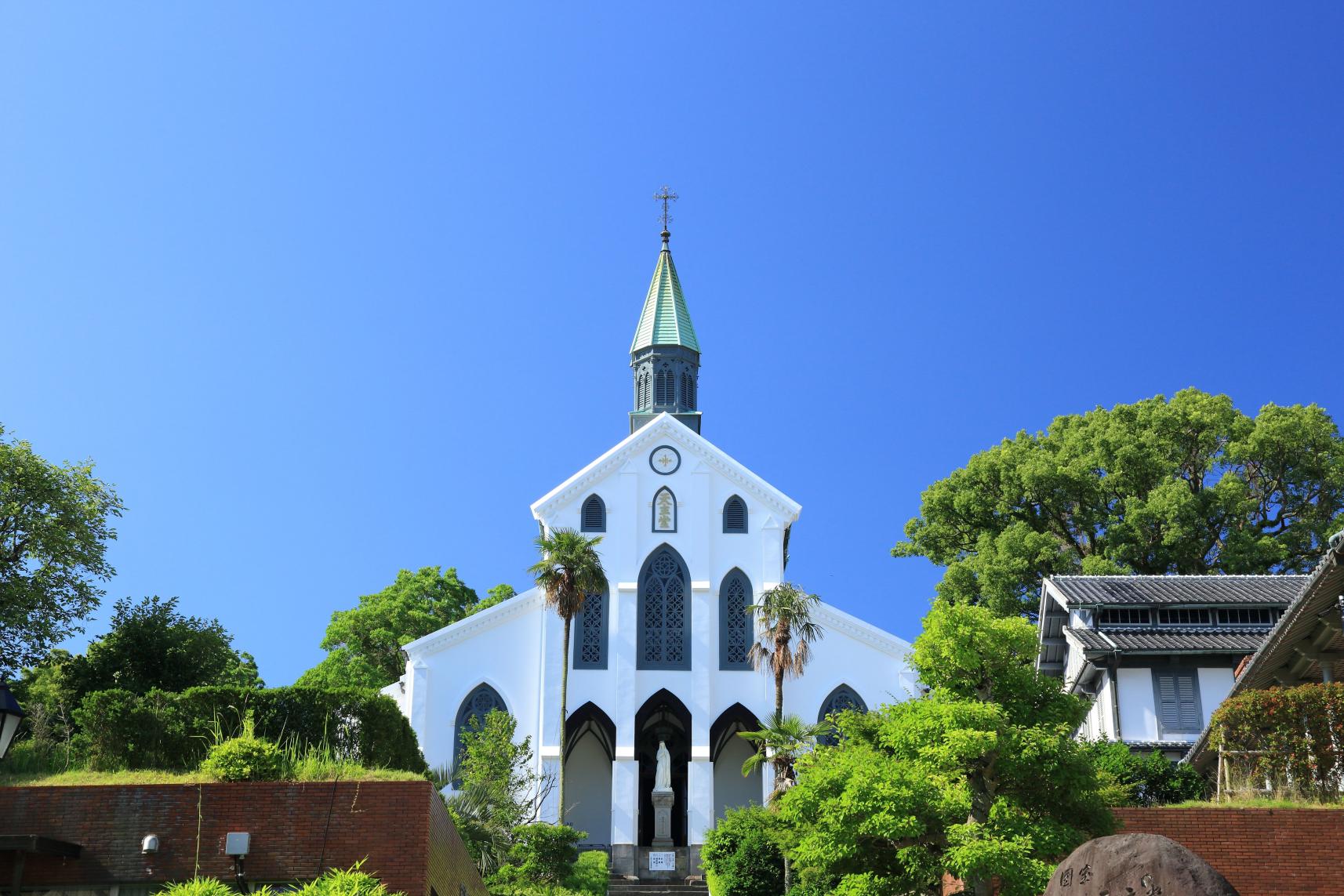
Oura Cathedral / La cathédrale d’Oura
View moreOura Cathedral is one of the components that demonstrates what triggered the end of Hidden Christians’ hiding. Hidden Christians met the missionaries for the first time in two centuries (the ‘Discovery of Hidden Christians’). Hidden Christian leaders throughout the Nagasaki region visited the cathedral, and such contact with the missionaries brought about the transition and subsequent end of Hidden Christians’ hiding.
-
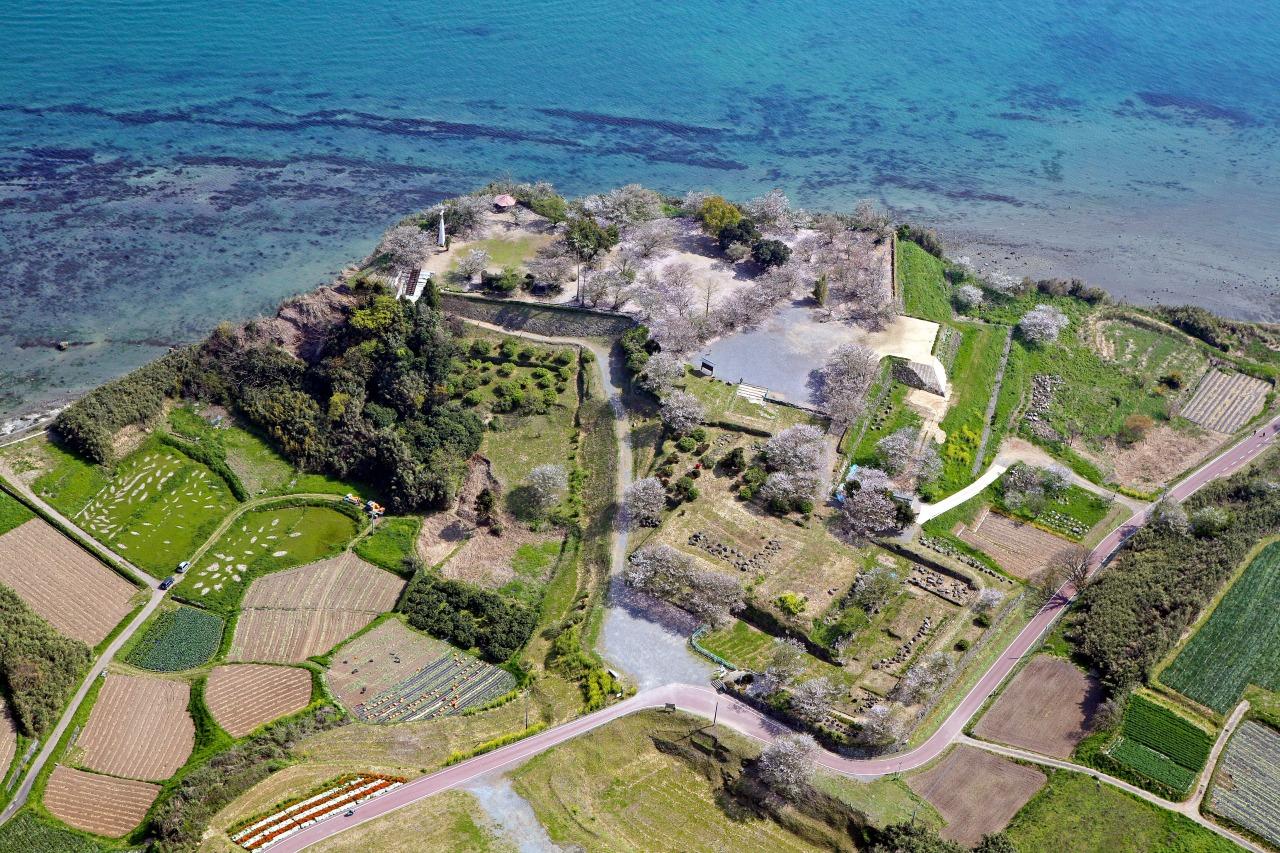
Remains of Hara Castle / Les vestiges du château de Hara
View moreThe Remains of Hara Castle are located in the southern part of the Shimabara Peninsula, in the southeastern area of the Nagasaki region. The castle was built on a hill where a cliff protrudes out over the sea. The castle was protected on all four sides, by the sea to the east, north, and south and by swampland on the western side. The castle became a battlefield during the Shimabara-Amakusa Rebellion of 1637.
-
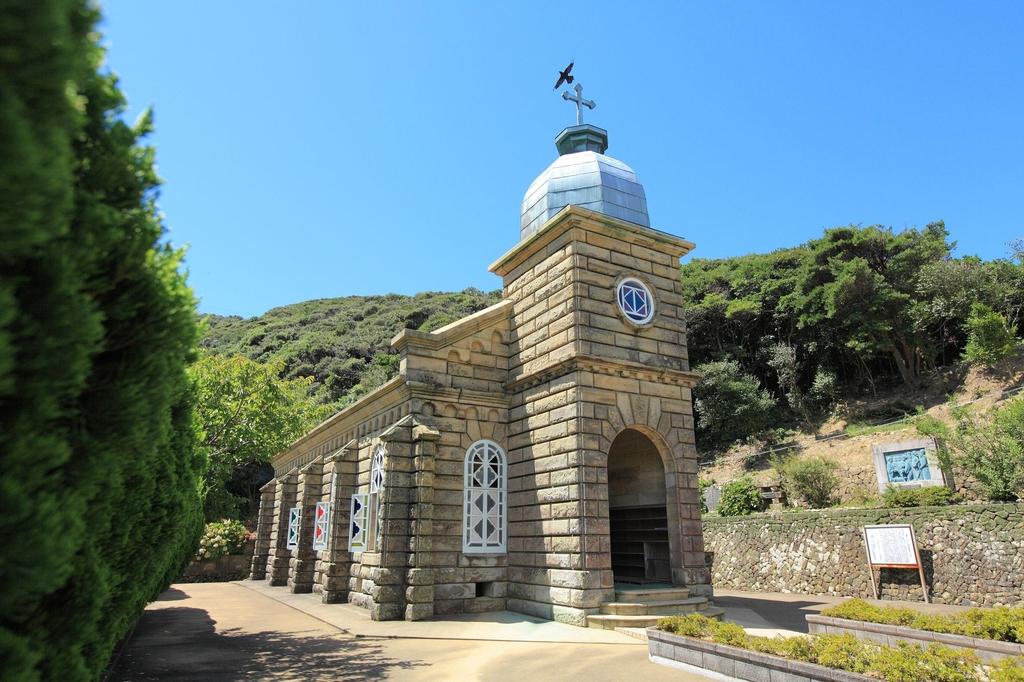
Kashiragashima Church
View moreKashiragashima Church, this sandstone church, a rare sight in Japan, was built by Christians returning to the islands after the period of persecution, from stones they quarried themselves. The church is designated as an Important Cultural Property of Japan and is part of the “Churches and Christian Sites in Nagasaki” bid for designation as a World Heritage Site.
Sites of Japan’s Meiji Industrial Revolution
These 23 historical sites tell the story of Japan's development into a modern industrial nation from the late 19th century through the early 20th century. The sites show us how Nagasaki, having previously developed as a trading port, also served an important role as a center of the shipbuilding and coal-mining industries; eight of the sites are located in Nagasaki Prefecture.
-
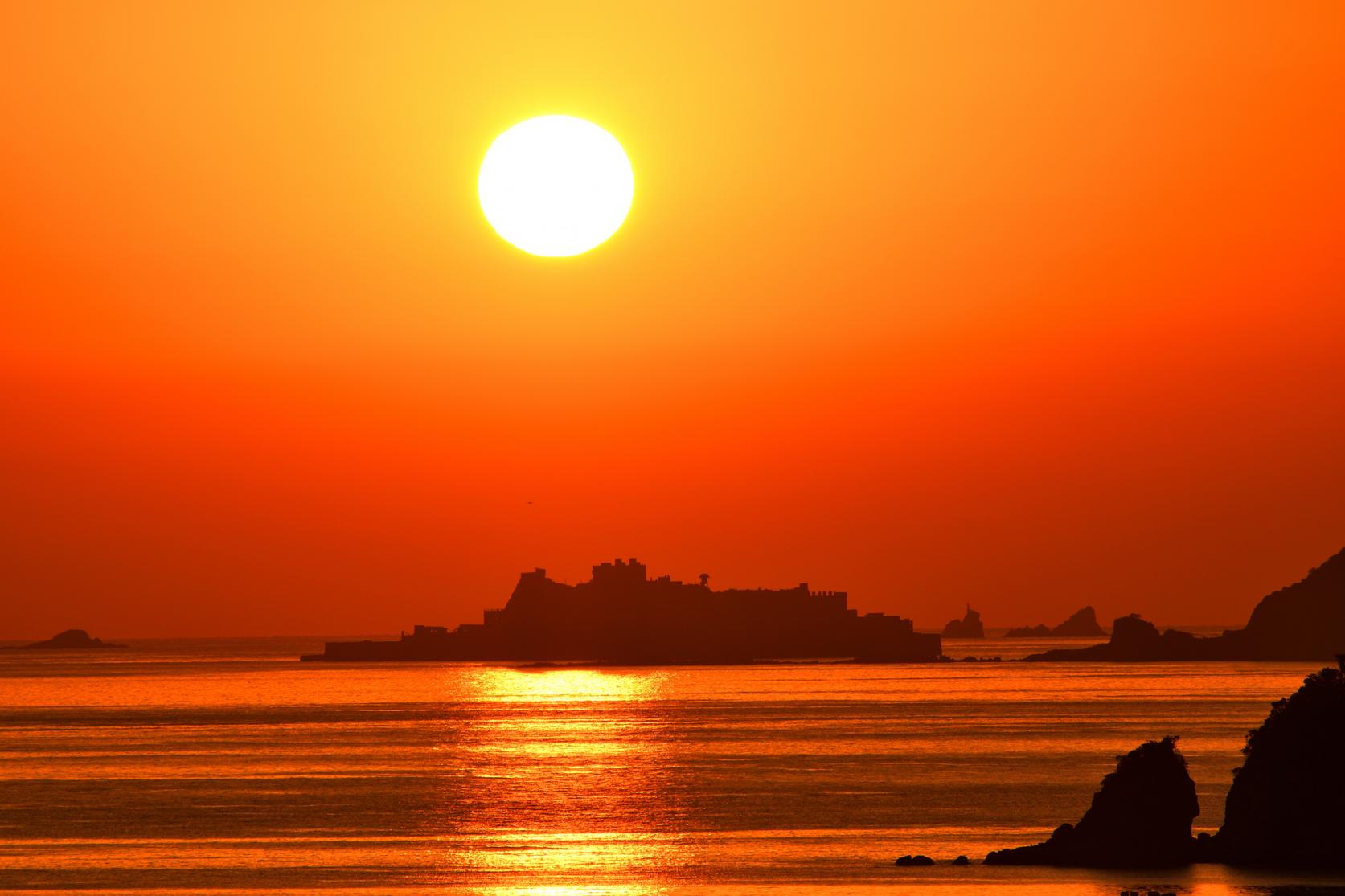
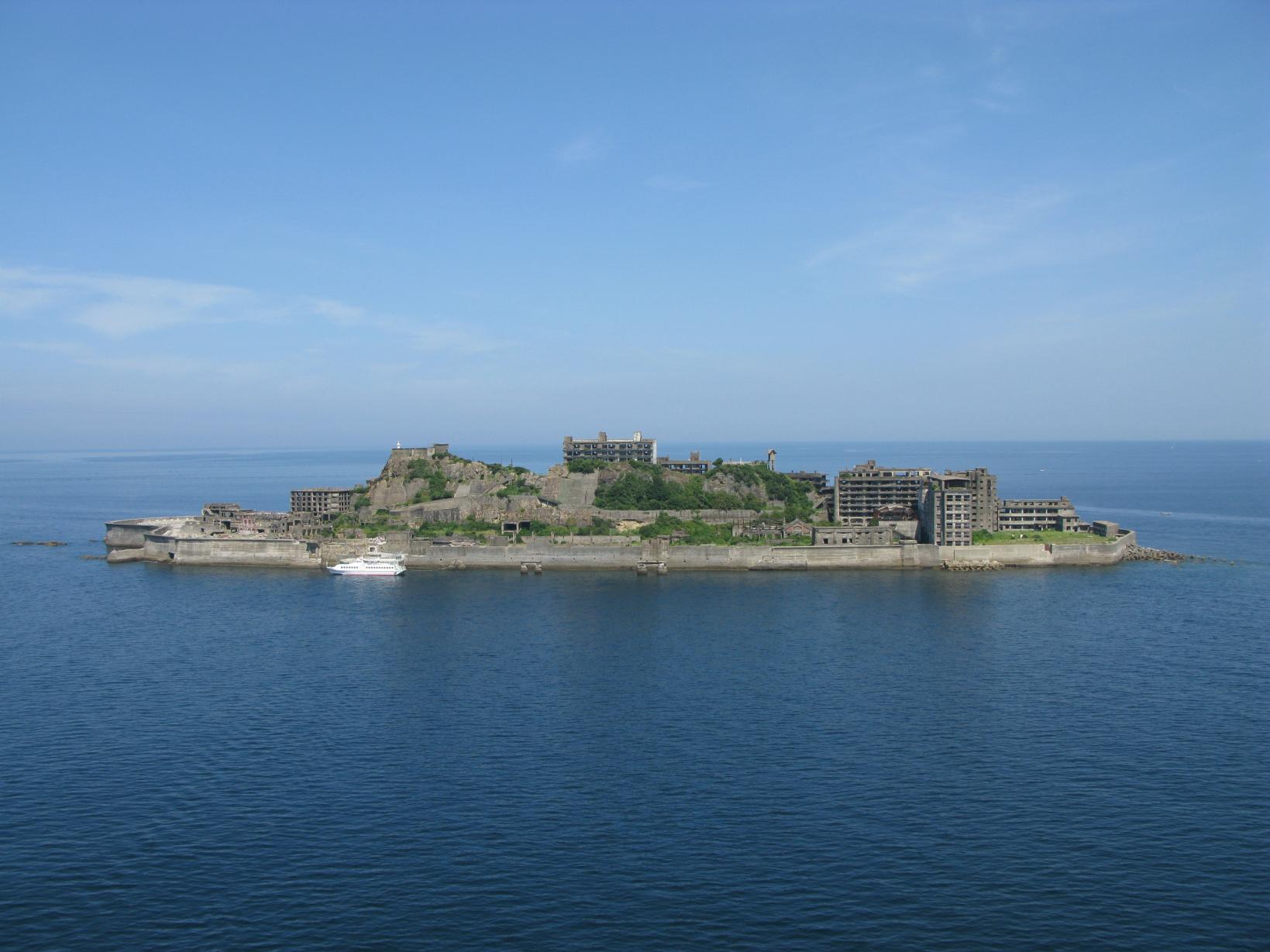
Hashima Island (Gunkanjima Island)
View moreHashima Island, also known by its nickname “Gunkanjima” (Battleship Island) due to its unique silhouette, is a small island that flourished as a coal mining community from 1890 to 1974. It reached its peak population of 5,267 people in 1959, making it the world’s highest population density ever recorded in history. However, in 1974, the island became completely deserted after the coalmine was closed.
In 2015, Hashima Island was registered as a UNESCO World Heritage site, listed as a component of “Sites of Japan’s Meiji Industrial Revolution: Iron and Steel, Shipbuilding, and Coal Mining Industries.” -
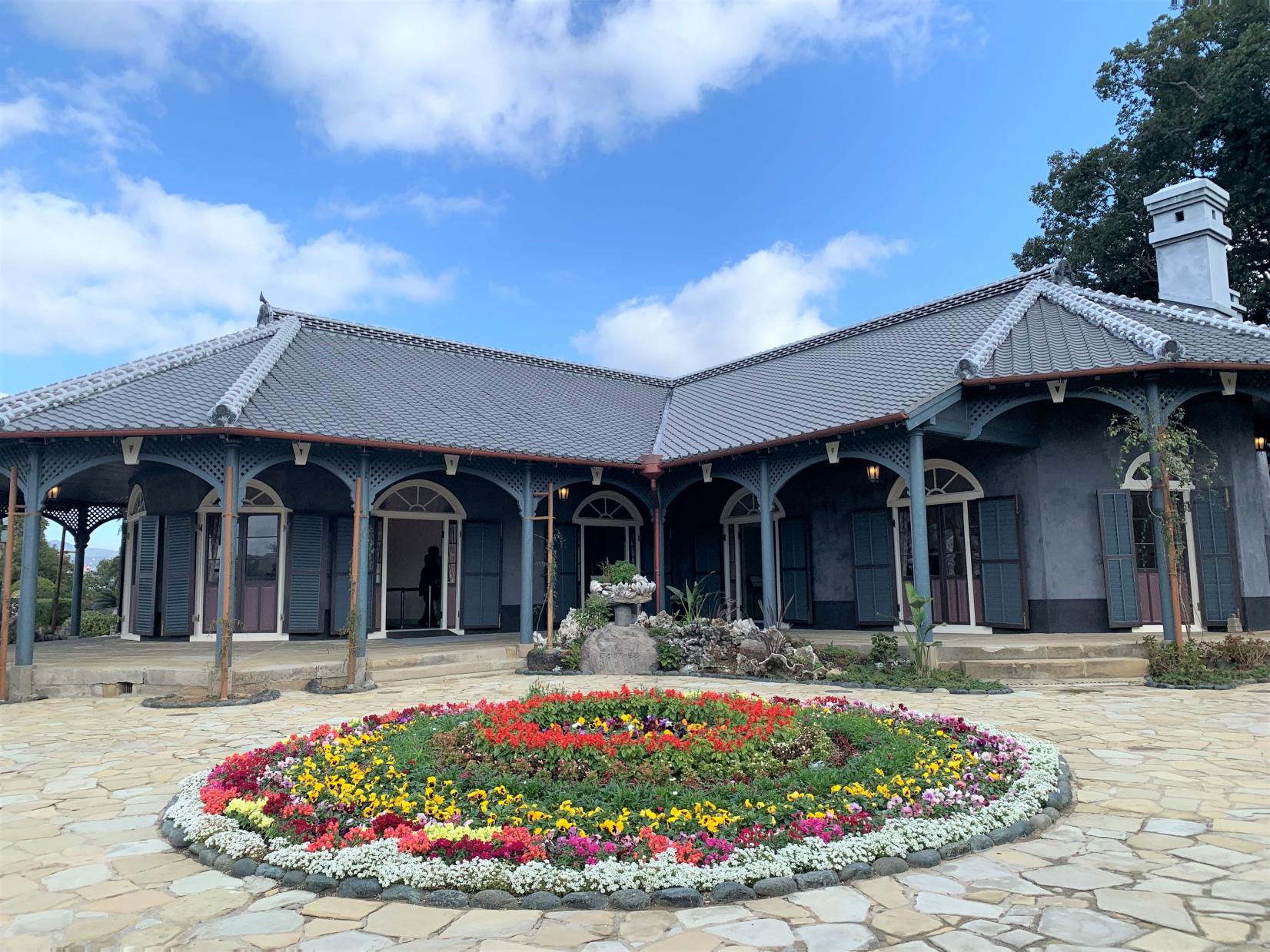
Glover Garden
View moreGlover Garden is situated on the southern slope of a mountain, ensuring that the garden's flowers can be enjoyed in full bloom throughout the year. This excellent vantage point offers a superb and extensive view of Nagasaki Harbor. The gardens feature the former Glover Residence, which, in addition to the gardens, was donated to the city of Nagasaki in 1957 by the Nagasaki Shipyard of Mitsubishi Heavy Industries and opened to the public. Eventually, six other Western-style residences from the Meiji era that had been built throughout the city were dismantled, moved, reconstructed and restored as important national cultural properties on this site of former foreign settlements.
A place to pray for world peace
Nagasaki suffered atomic bombing at the very end of World War II. Despite having such immense tragedy in its past, Nagasaki achieved a near-miraculous comeback in the post-war period to become the Nagasaki of today—a city that continues to broadcast the importance of world peace to people everywhere.
-

Peace Park
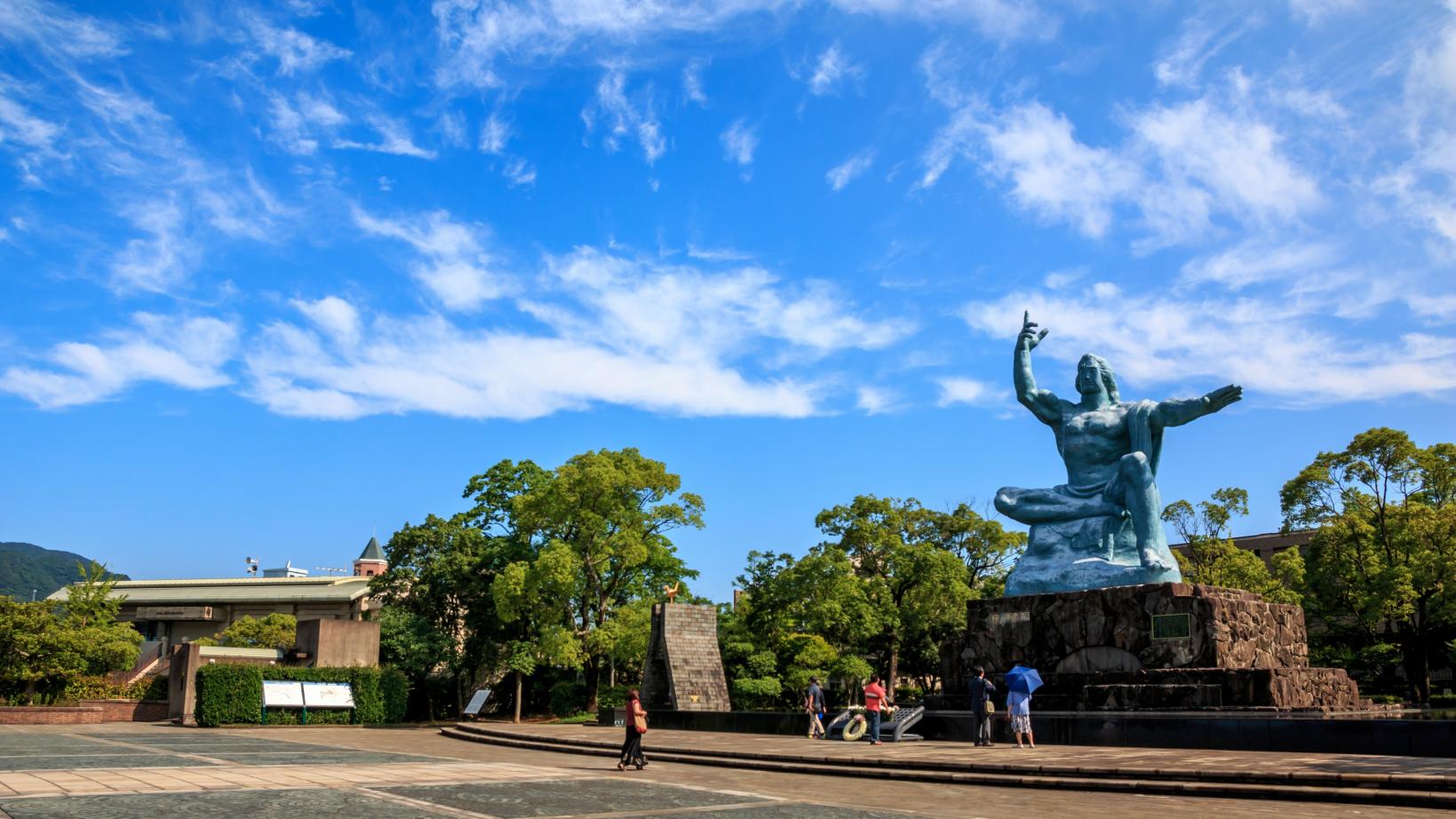
View moreNagasaki Peace Park is built on a low hill to the north of the hypocenter of the atomic bomb blast. It was created to represent the wish for world peace and a vow that such a tragic war would never be repeated. The park features the 9.7-meter-high Peace Statue symbolizing the Nagasaki citizens' wish for peace. Sculptor Seibou Kitamura, a Nagasaki native, created this statue as a symbol of the divine love and mercy of Buddha. The raised right hand points to the heavens to signify the threat of atomic weapons while the left arm is raised horizontally to represent the wish for peace. The figure's eyes are lightly closed in prayer for the souls of the atomic bomb victims.
-
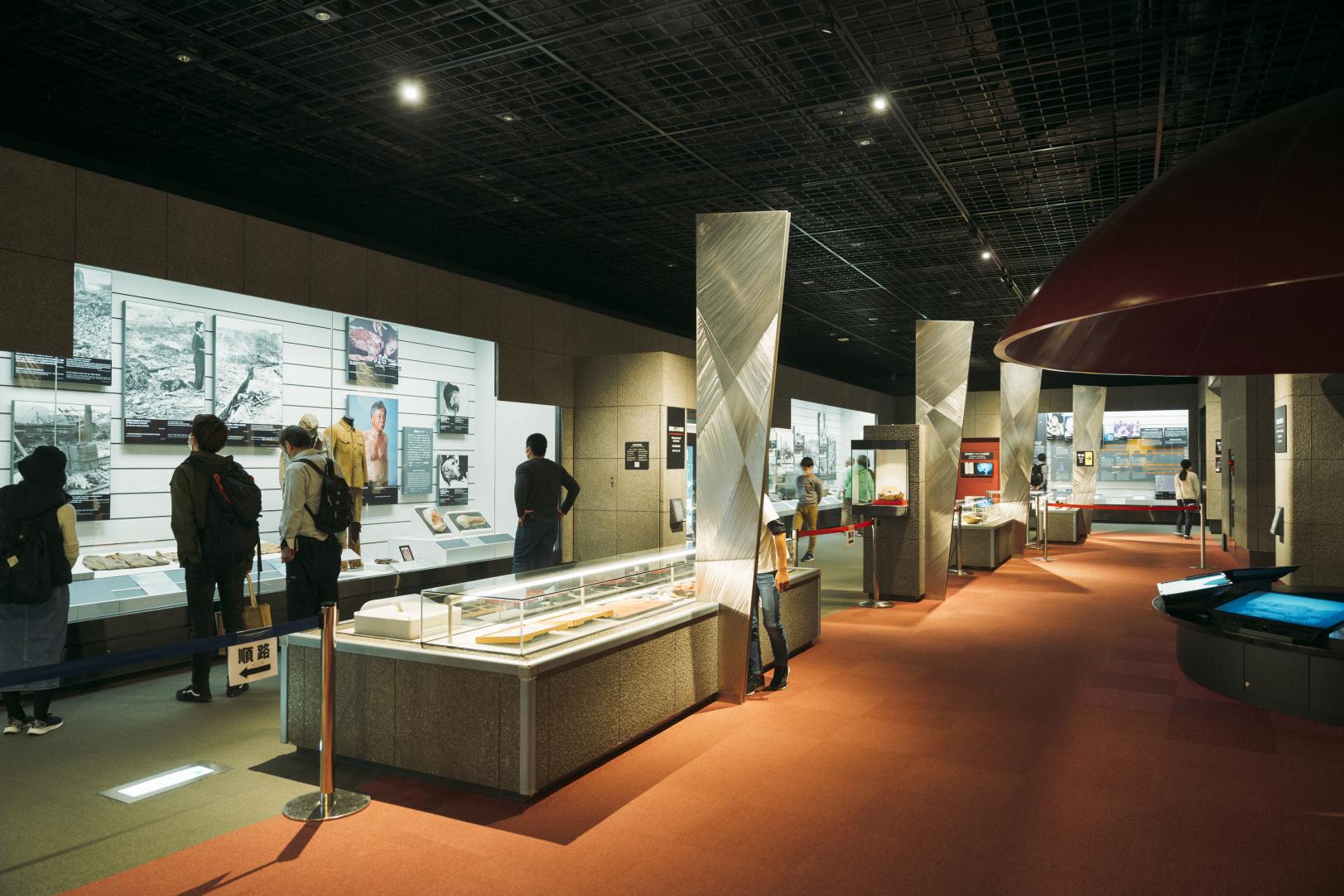
Nagasaki Atomic Bomb Museum
View moreOn August 9, 1945, at 11:02 a.m. - three days after the first atomic bomb was dropped on Hiroshima - the second atomic bomb exploded over the Urakami district of Nagasaki. This bomb killed or injured 150,000 people.
Nagasaki Atomic Bomb Museum covers the history of this event in the accessible form of a story. It begins with the disastrous scene of the attack and includes the events leading up to the dropping of the atomic bomb, the reconstruction of Nagasaki up to the present day, the history of nuclear weapons development, and the hope for a peaceful world free of nuclear weapons.
Nagasaki's finest scenic spots
Made up of numerous peninsulas and islands, Nagasaki is a place where distinctive and beautiful landscapes set off by beautiful blue seas can be discovered everywhere. There are so many places where wonderful photographs can be taken, including the Nita Pass (famous for autumn colors) and Mt. Inasa, officially designated as one of the world's three best night views.
-
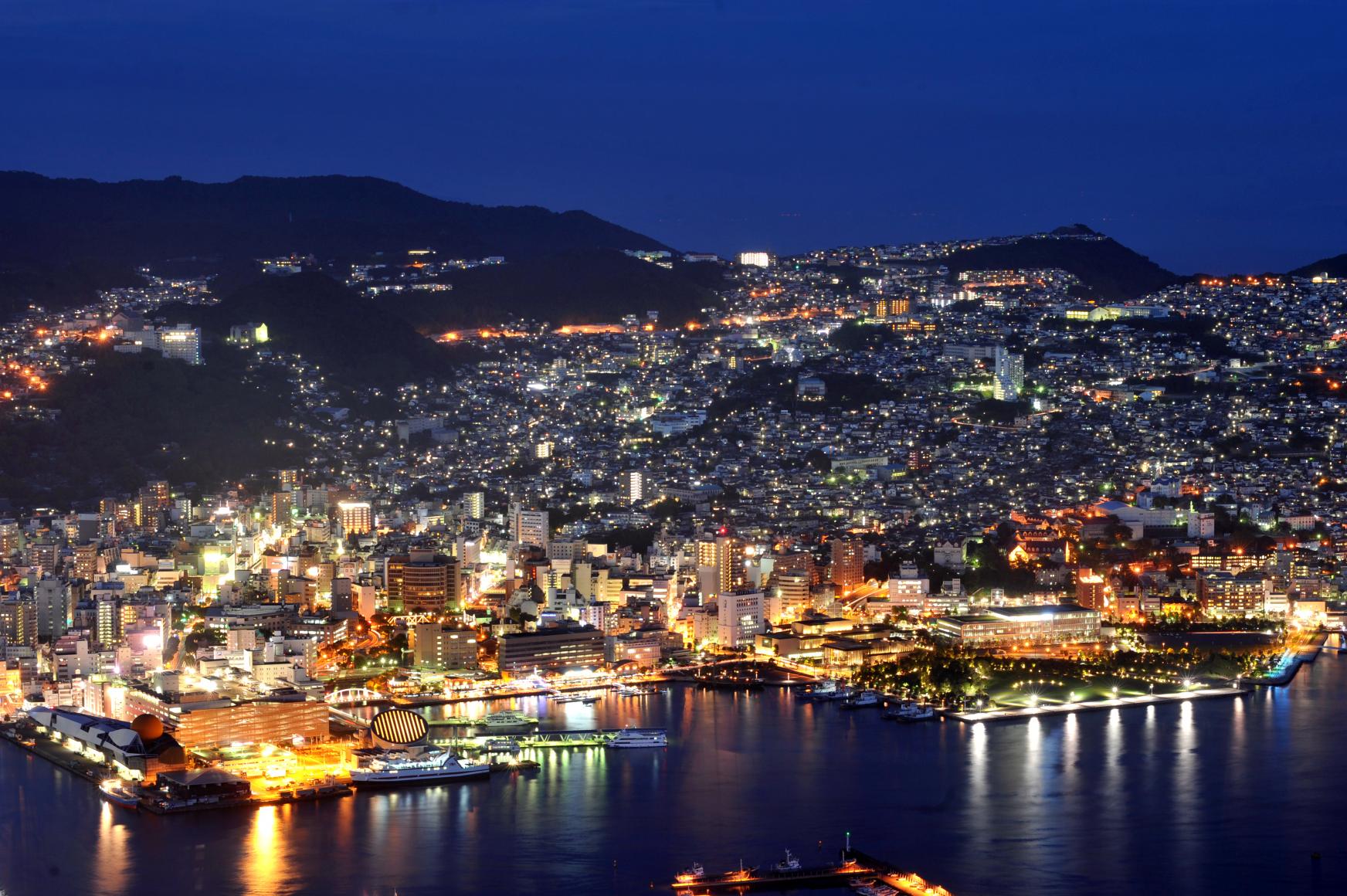
Mt. Inasa & Nagasaki Ropeway
View moreRising 333 meters above sea level in the center of Nagasaki, Mount Inasa Park in the Inasa mountain range is a natural park beloved by the residents of the city. It is renowned for its displays of azaleas in the spring. The summit features a glass-enclosed circular domed lookout from which one can enjoy a 360-degree view of the spectacular scenery. On clear days, one can even see Mt. Unzen, the Amakusa area, and the Goto chain of islands.
-
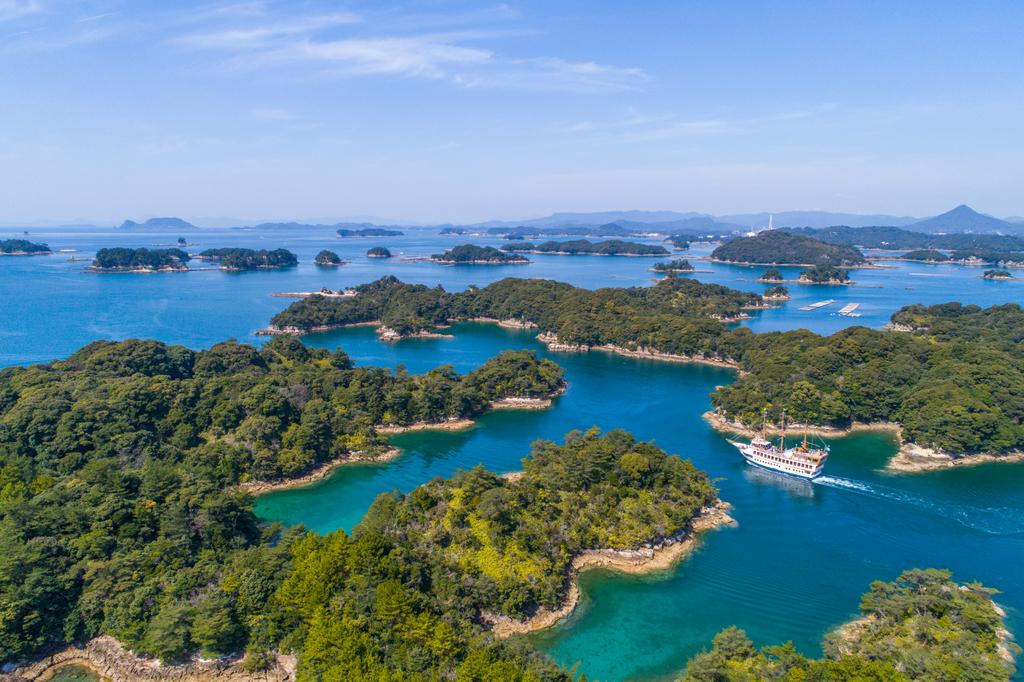
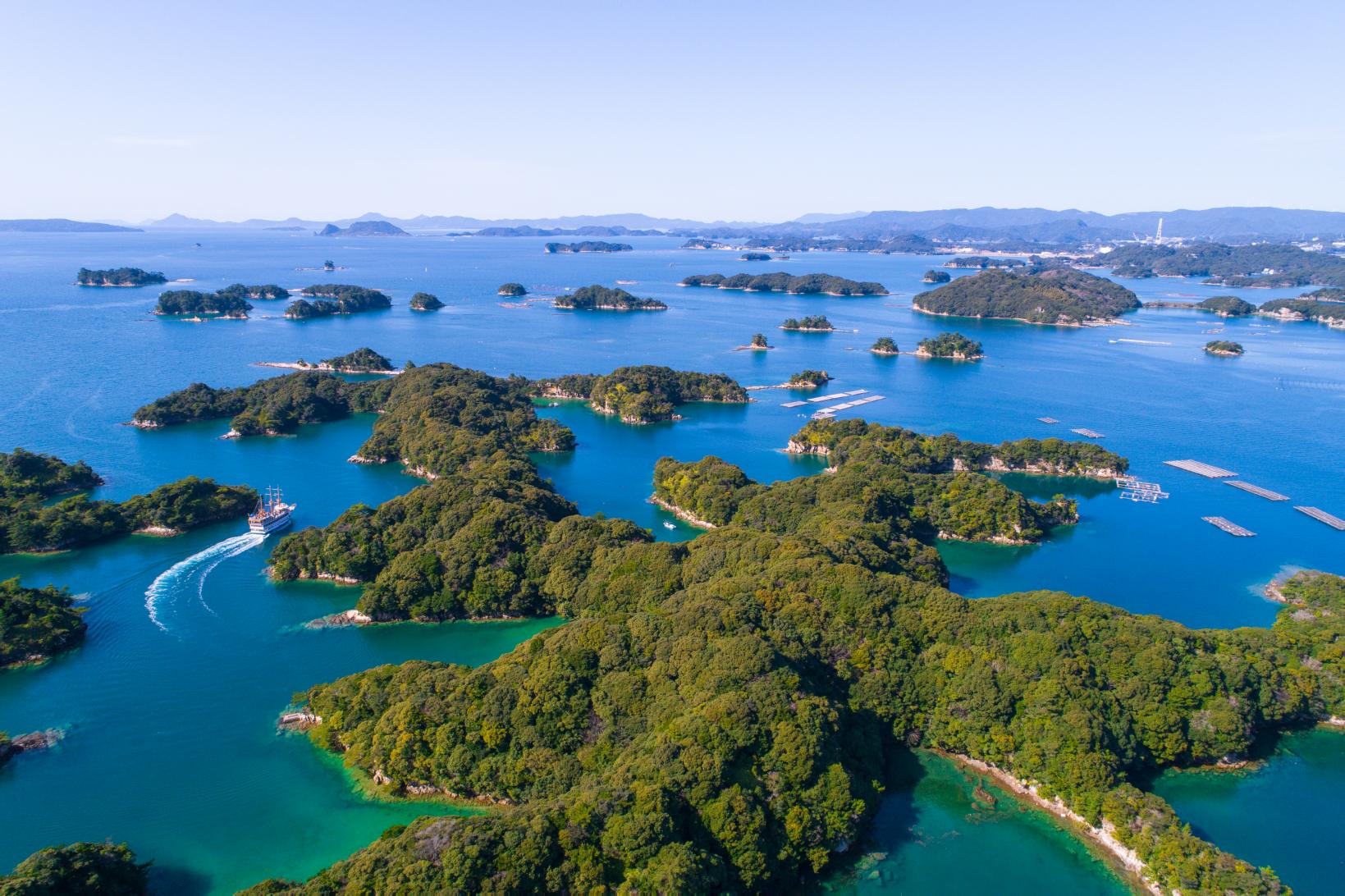
Kujukushima
View moreThe Kujuku Islands, the westernmost islands off mainland Japan, cosist of 208 islands both large and small. The density of these islands is said to be the highest in Japan, and they offer beautiful, untouched nature. The beautiful contrast between the blue sea and the deep green of the trees covering the islands is a magnificent sight to behold. Enjoying the scenery from the ocean, via either a sightseeing boat or a sea kayak, is also recommended.
-
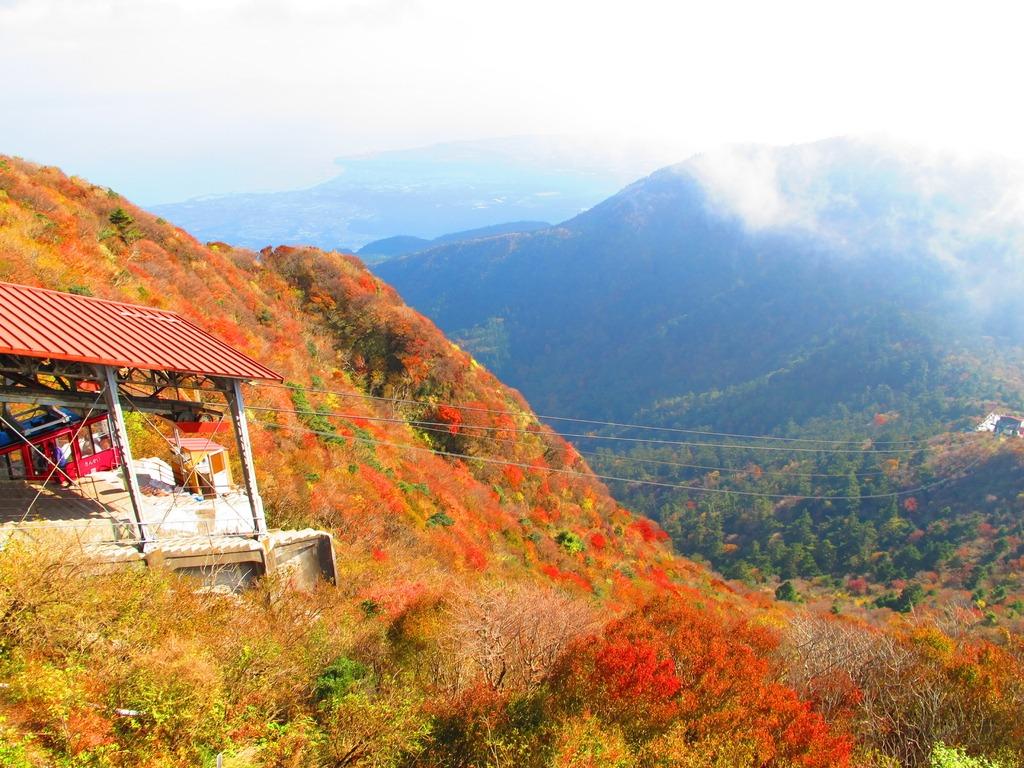
Nita Pass
These mountains are famous for their azaleas in the spring, green colors in the summer, autumn leaves in the fall, and frosty fog in the winter. Enjoy the cable-car ride up to the top for breathtaking views. A brand new trekking path allows hikers to enjoy the mountain flowers and wild birds, as well as stunning close-up views of Heisei Shinzan, the peak newly-formed by the 1990s Fugendake eruption.View more -
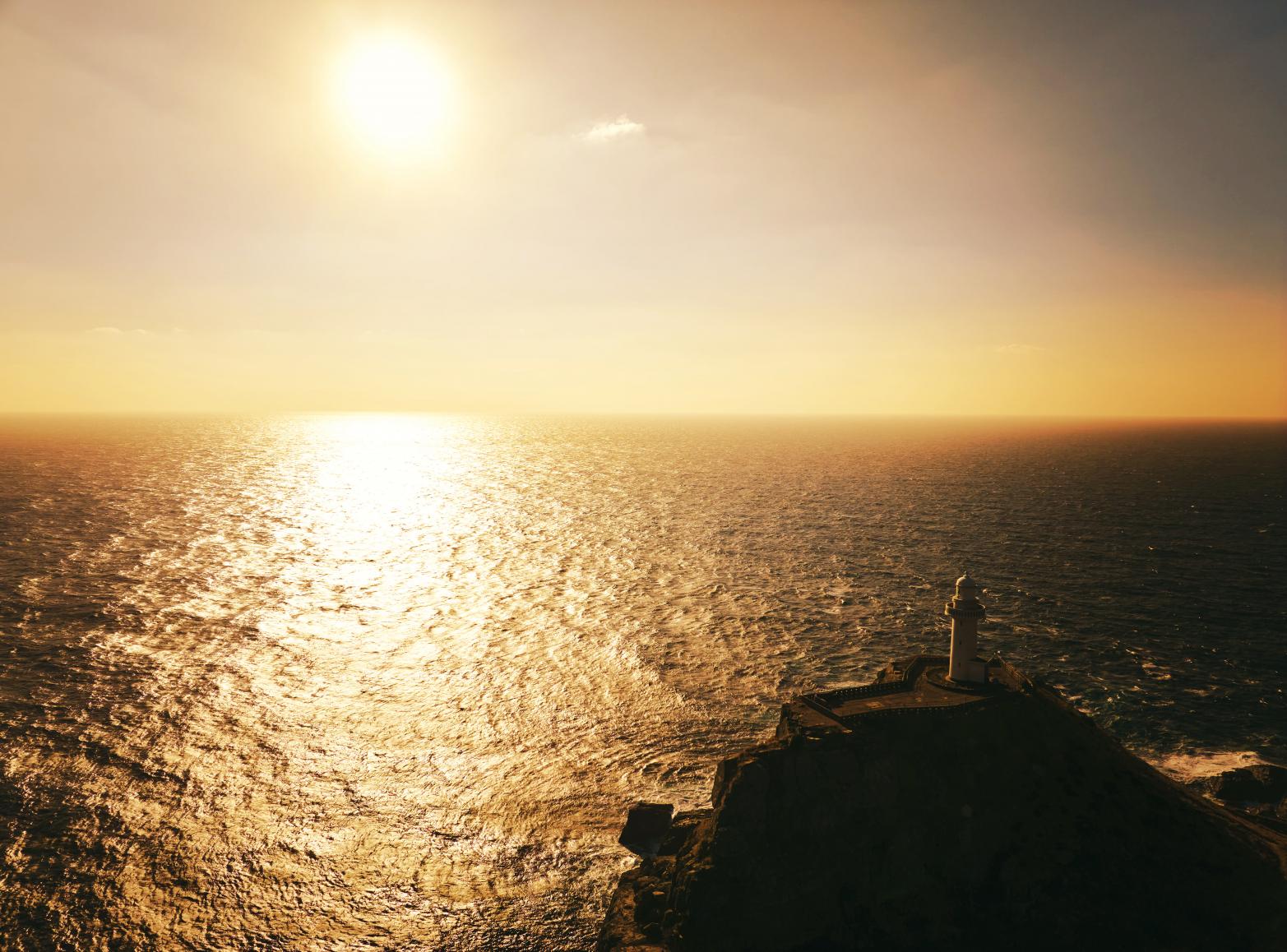
Osezaki Lighthouse
View moreThe Osezaki Lighthouse is set against a dramatic backdrop of wave-worn cliffs as steep as 150 meters. Although the current lighthouse was built in 1971, the original structure was designed by an Englishman and erected in 1879. A part of it has been turned into a permanent exhibit at the Museum of Maritime Science in Tokyo.
-
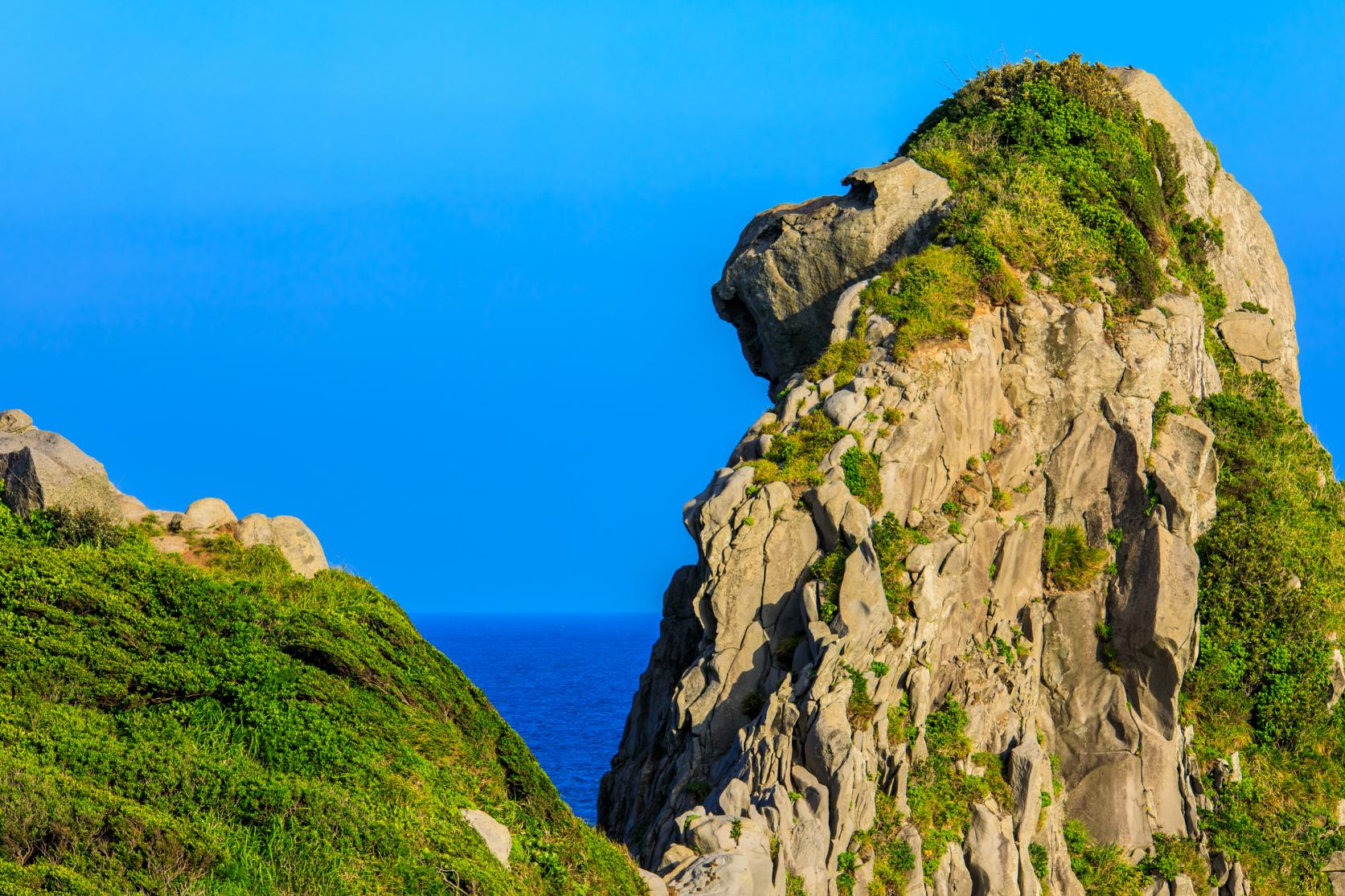
Saru Iwa (Monkey Rock)
View moreThe Saruiwa (Monkey Rock) created by nature over many years looks just like a monkey facing away! It appears in a legend because it is a mysterious sight. It is also said to be a pillar built by the gods so that Iki-no-shima will not be washed away. In addition to its giant and unique shape, the superb view of the beautiful setting sun you can see over the rock is noteworthy.
-
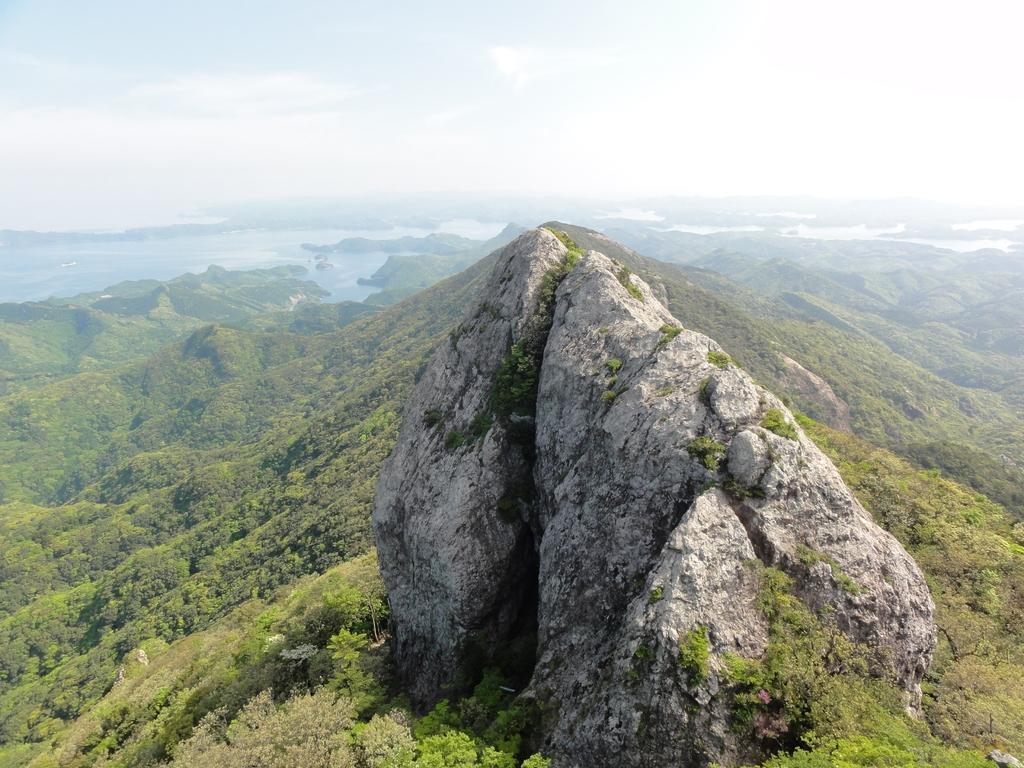
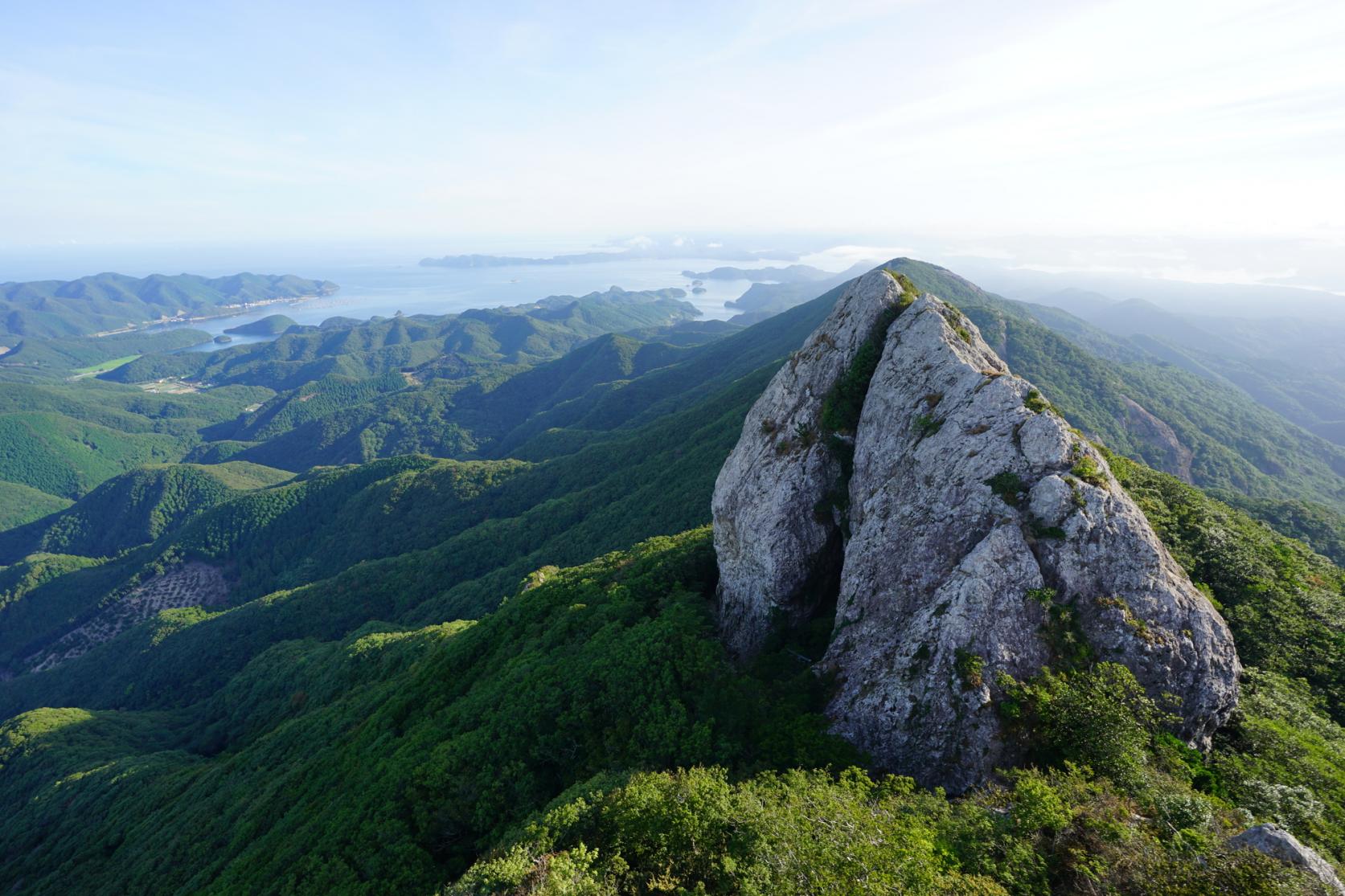
Mt. Shiratake
View moreLong worshipped as a sacred mountain, Mt. Shiratake is the symbol of Tsushima, the island where it stands. Primeval forest (a designated National Natural Monument of Japan) grows on its slopes; from the summit, travelers can take in the sight of Aso Bay and the surrounding peaks, and even see the mountains of South Korea on a clear day.
Fun and exciting spots for couples and families
Nagasaki Prefecture is full of places where couples and families can have a wonderful time.
From theme parks to experience-based attractions, there's no shortage of spots where visitors from all generations can make some truly special memories.
-
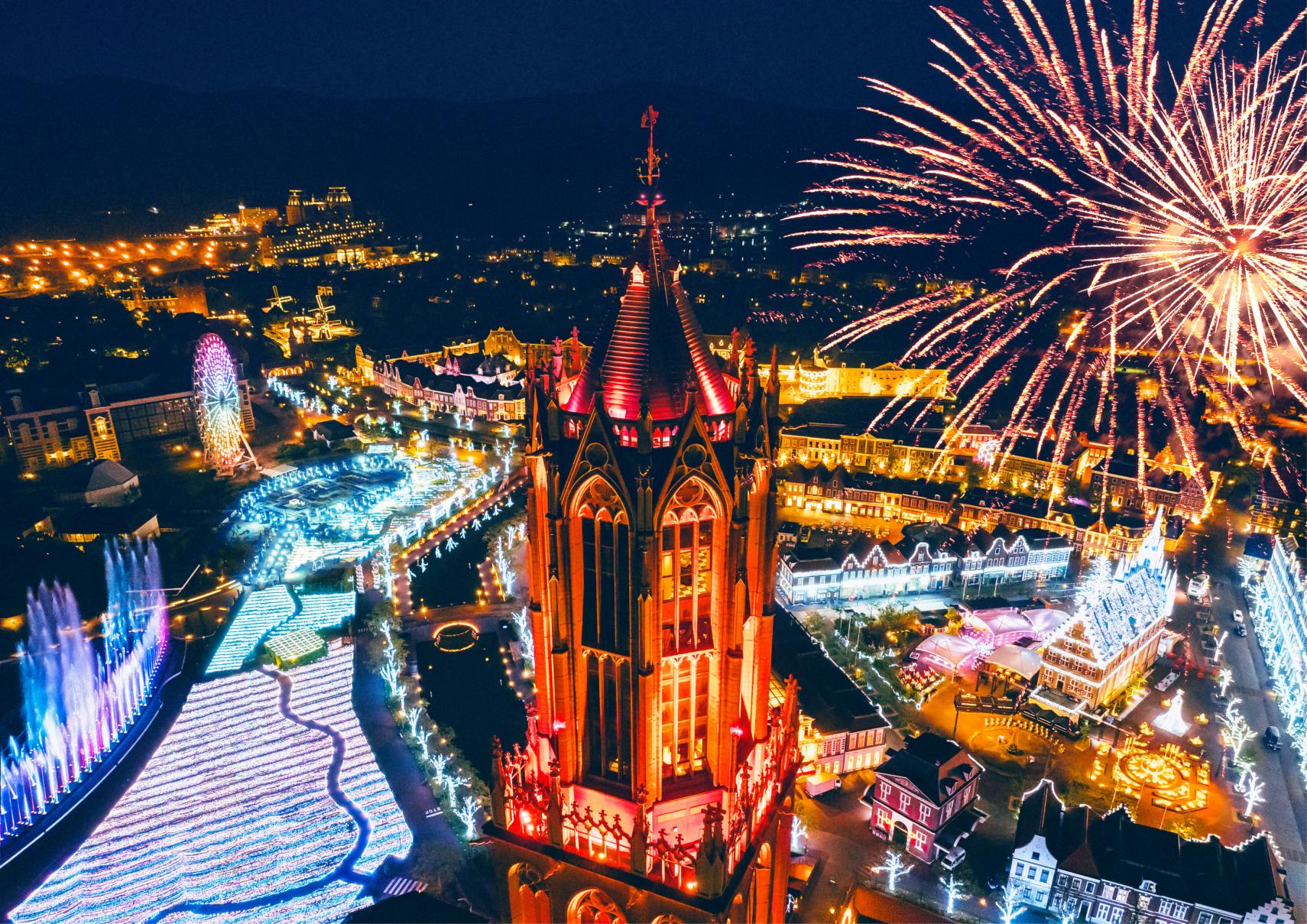
Huis Ten Bosch
View moreHuis Ten Bosch is a residential-style resort built to resemble a 17th century Dutch town. Built with special permission from the Dutch royal family, Palace Huis Ten Bosch is a reproduction of the residence of Her Majesty the Queen of The Netherlands.
In English, Huis Ten Bosch means “house in the forest,” and true to its name, this residential-style resort is surrounded by greenery and seasonal flowers. Huis Ten Bosch is well-known for its Flower Kingdom, where flowers bloom throughout the year. -
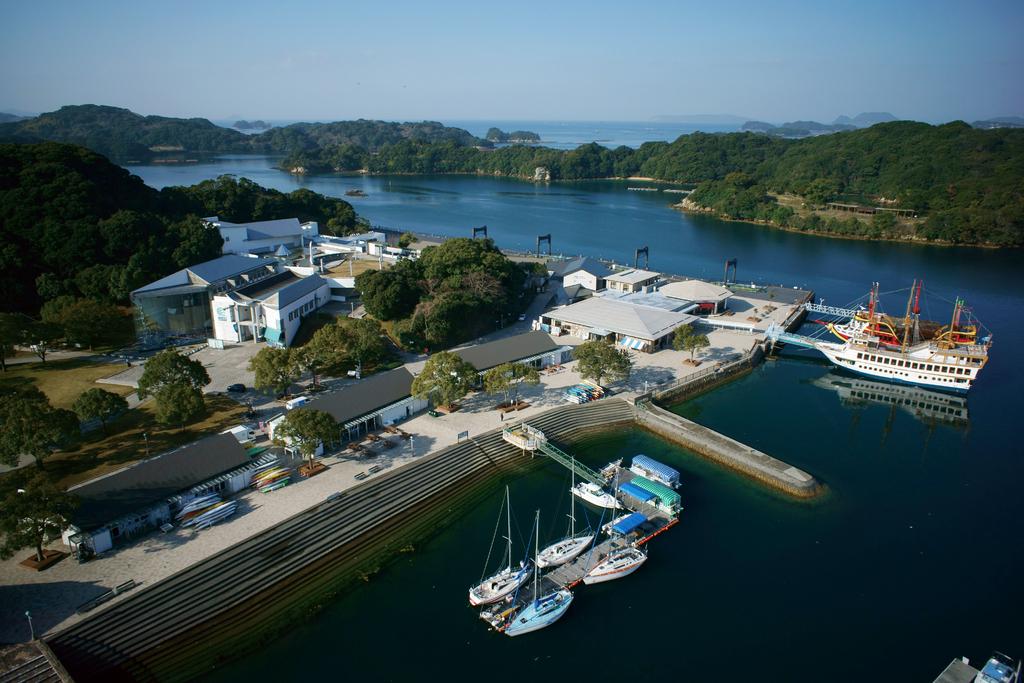
Kujukushima Pearl Sea Resort
View moreAlthough called "Kujukushima" (literally translates to “ninety-nine islands” and referring to the fact that there are so many), there are approximately 208 small islands in the area. Located inside Saikai National Park, the area has been registered in the "Most Beautiful Bays in the World" club.
The coast is dotted with observatories and look-outs to admire the scenery and not to mention the shimmering orange sunset display that mother nature puts on here!
-
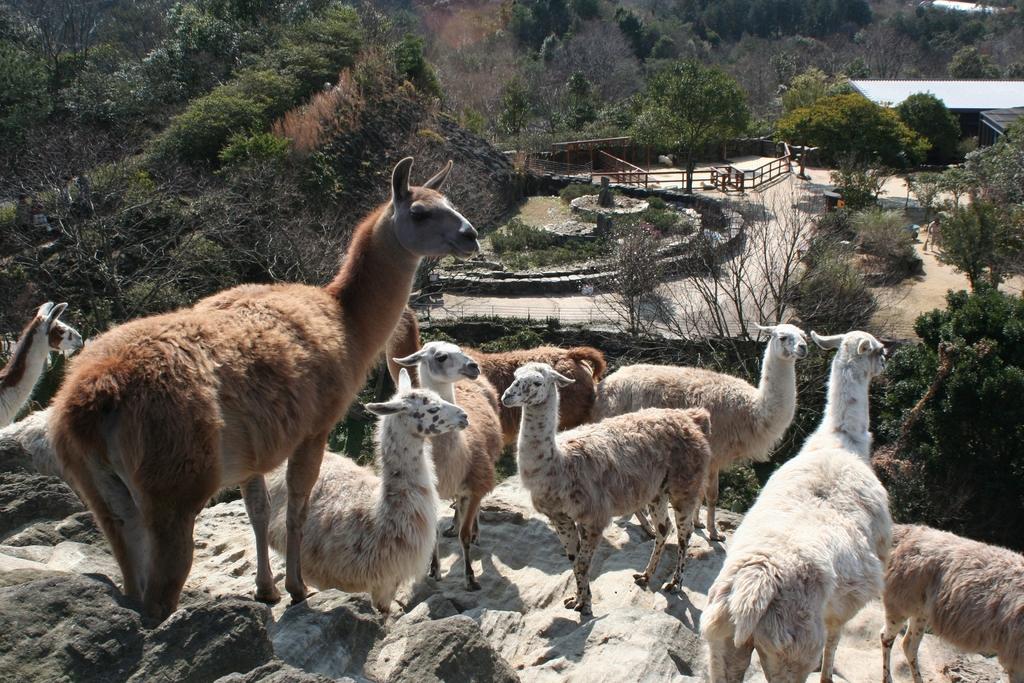
Nagasaki Bio Park
View moreThe Nagasaki Bio Park is truly a fun and unique experience for visitors of all ages! Most of the animals here are not caged, but instead are enclosed within an area that is designed to imitate their natural habitats. Most enclosures can be accessed by visitors, and one can even feed and pet some of the animals including the popular capybaras, squirrel monkeys, kangaroos and many more!
-
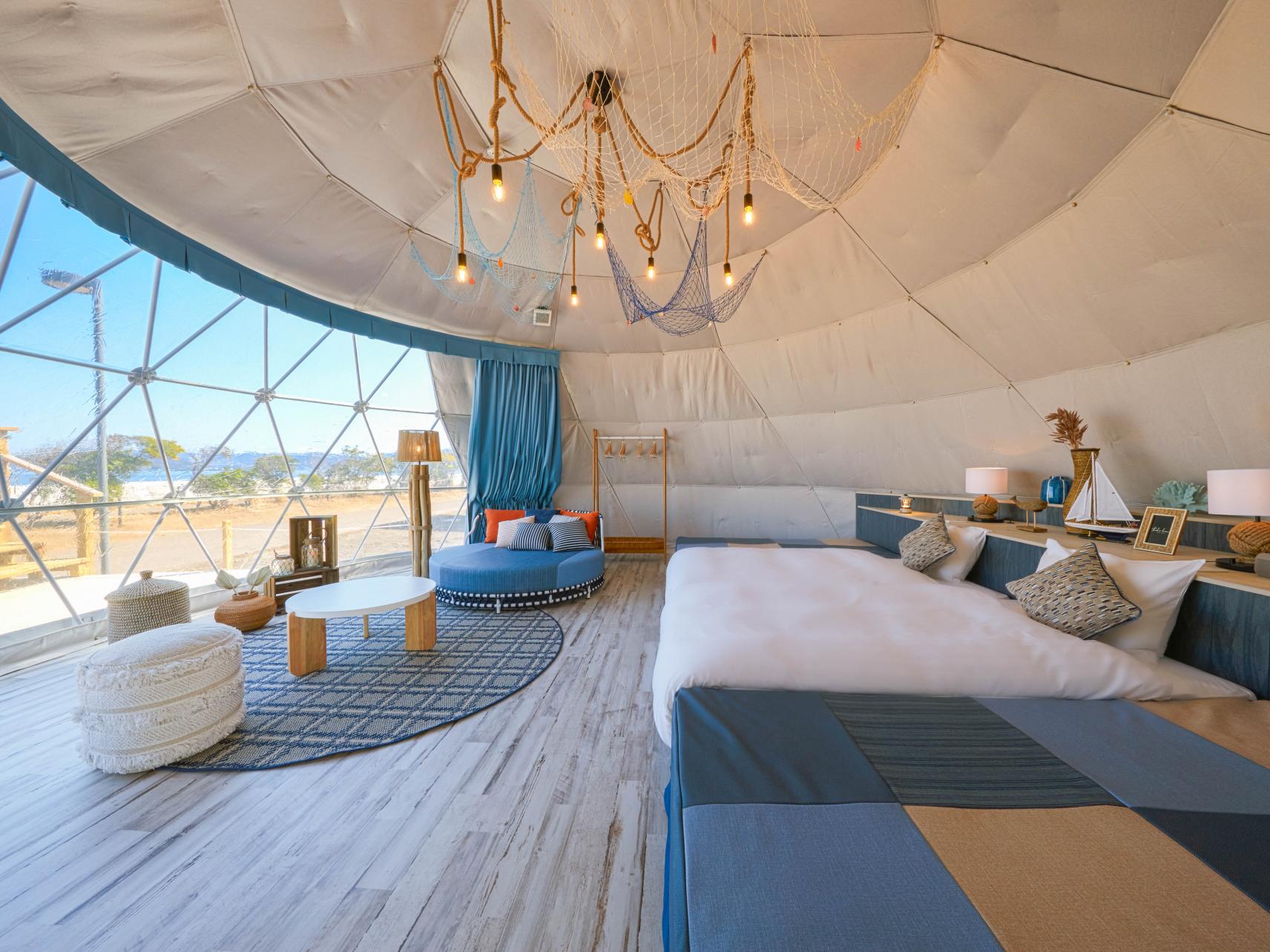
i+Land nagasaki
View moreThe entire island of Iojima is a resort area! Marine activities such as SUP and sea kayaking, cycling around churches, an all-weather spa theme park and more are available for you to enjoy during your stay on the island. After plenty of fun, enjoy your relaxing stay at either hotel-type or lodge-type accommodations. There are also restaurants where you can enjoy fresh fish from Nagasaki.

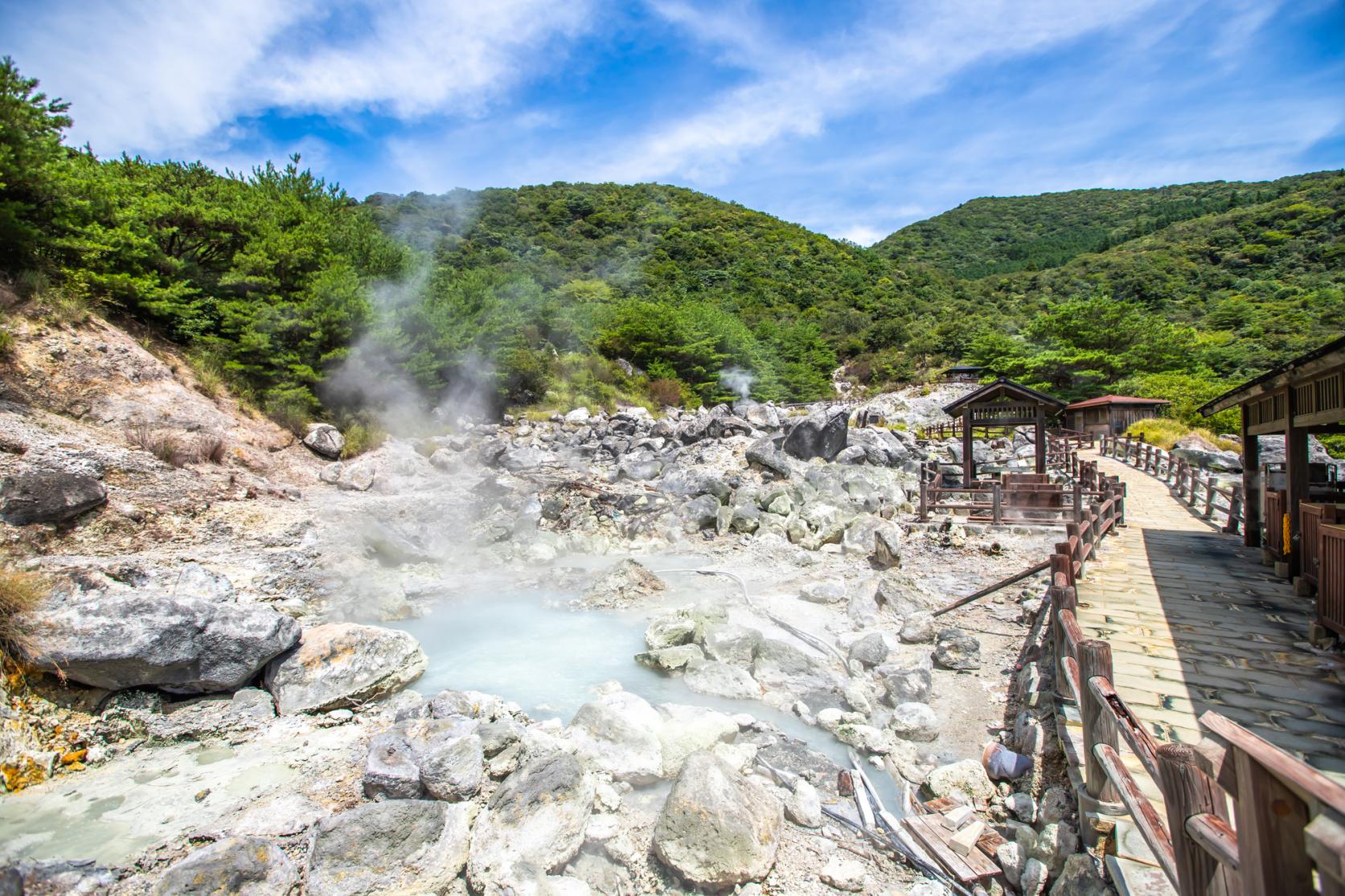
What kind of hot springs are there in Nagasaki Prefecture?
Well-known hot springs in Nagasaki include Unzen Onsen where bathers can get a real sense of the volcanic power of the region, and Obama Onsen which is renowned for beautiful views in the evening. Meanwhile, little Iki Island, despite its small size, boasts numerous hot springs as well.
When traveling has left you feeling tired out, seek out a nearby hot spring for the perfect remedy!
Nagasaki: A unique opportunity to stroll through Japanese, Western and Chinese streetscapes
Because Nagasaki was a center for trade with the outside world during Japan's isolation period (1639 to 1853), a blended culture combining elements from Japan, China and Holland developed in the city. Let's take a look at some of Nagasaki's most distinctive neighborhoods where these different cultural influences remain visible today. You can use this information as a reference for touring around Nagasaki Prefecture.
Shimabara Castle Town: Breathe in the atmosphere of Edo Japan
Shimabara has been known as "the city of water" for centuries. Across the city are streets lined with waterways and old houses where samurai once lived, with Shimabara Castle at the center. A relaxing stroll through these neighborhoods is a serene way to spend a few hours.
-
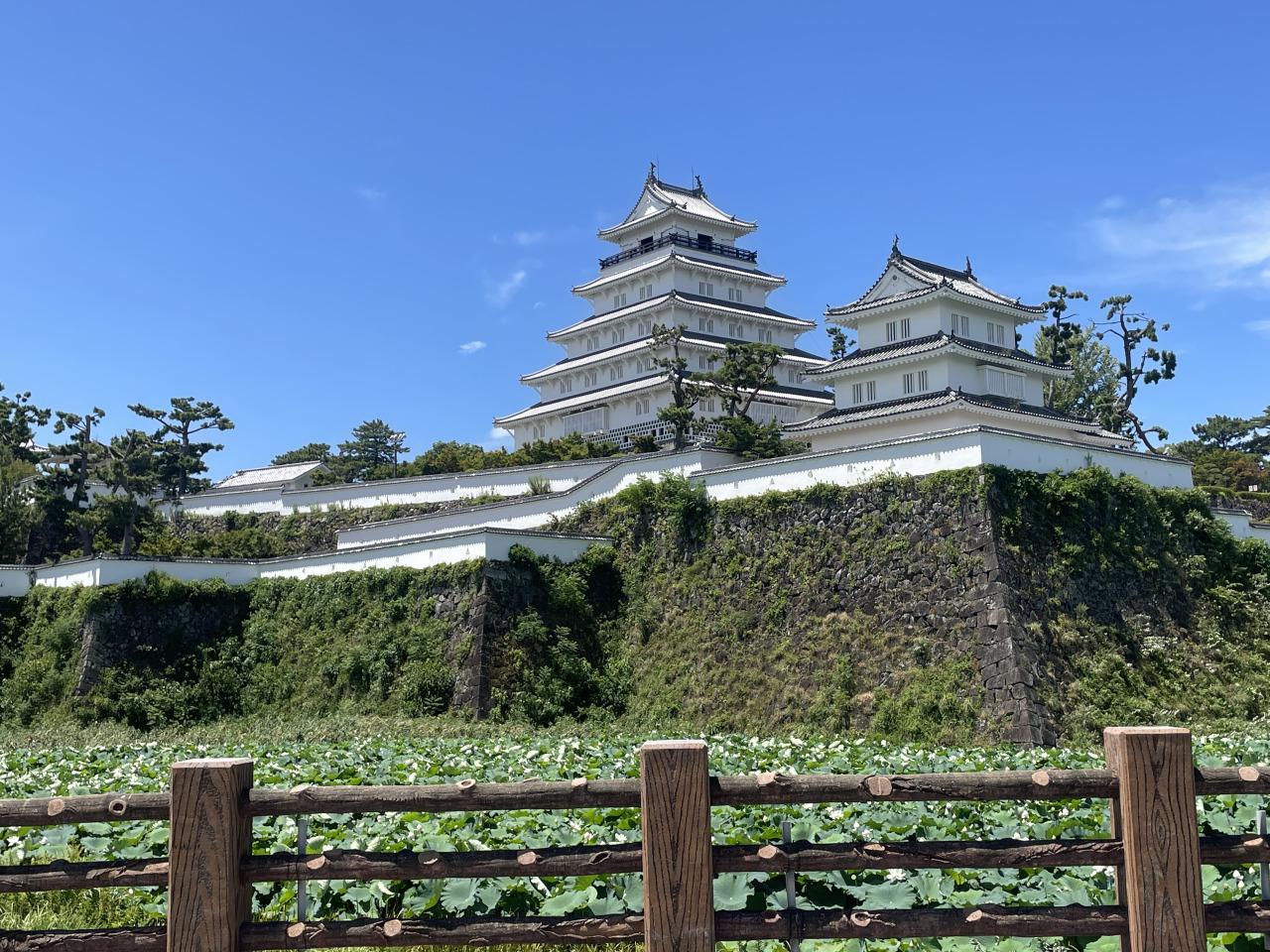
Shimabara Castle
View moreShimabara Castle was built by Lord Matsukura Shigemasa, and the construction of the castle took seven years to complete (1618 ~ 1624). The castle served as the residence for 19 successive feudal lords from 4 clans (Matsukura, Koriki, Matsudaira and Toda), and it survived the fierce attack of the Shimabara Rebellion (a rebellion against the persecution of Christians).
-
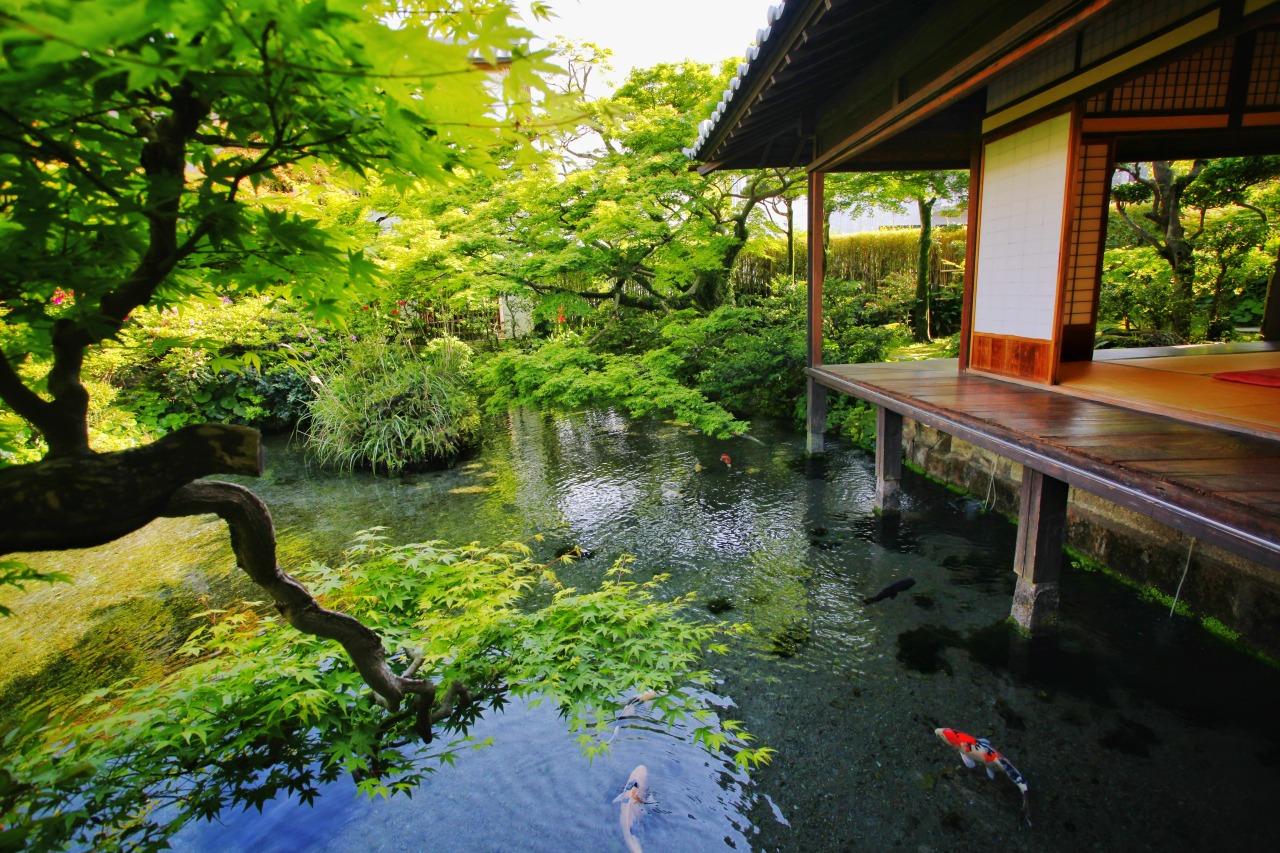
Spring Garden Shimeiso
View moreOn the west side of Shimabara Castle, the samurai residences have been carefully preserved, complete with clear spring water flowing in canals down the center of the streets.
While being used for everyday life, the water also served to help with firefighting and disaster prevention. -
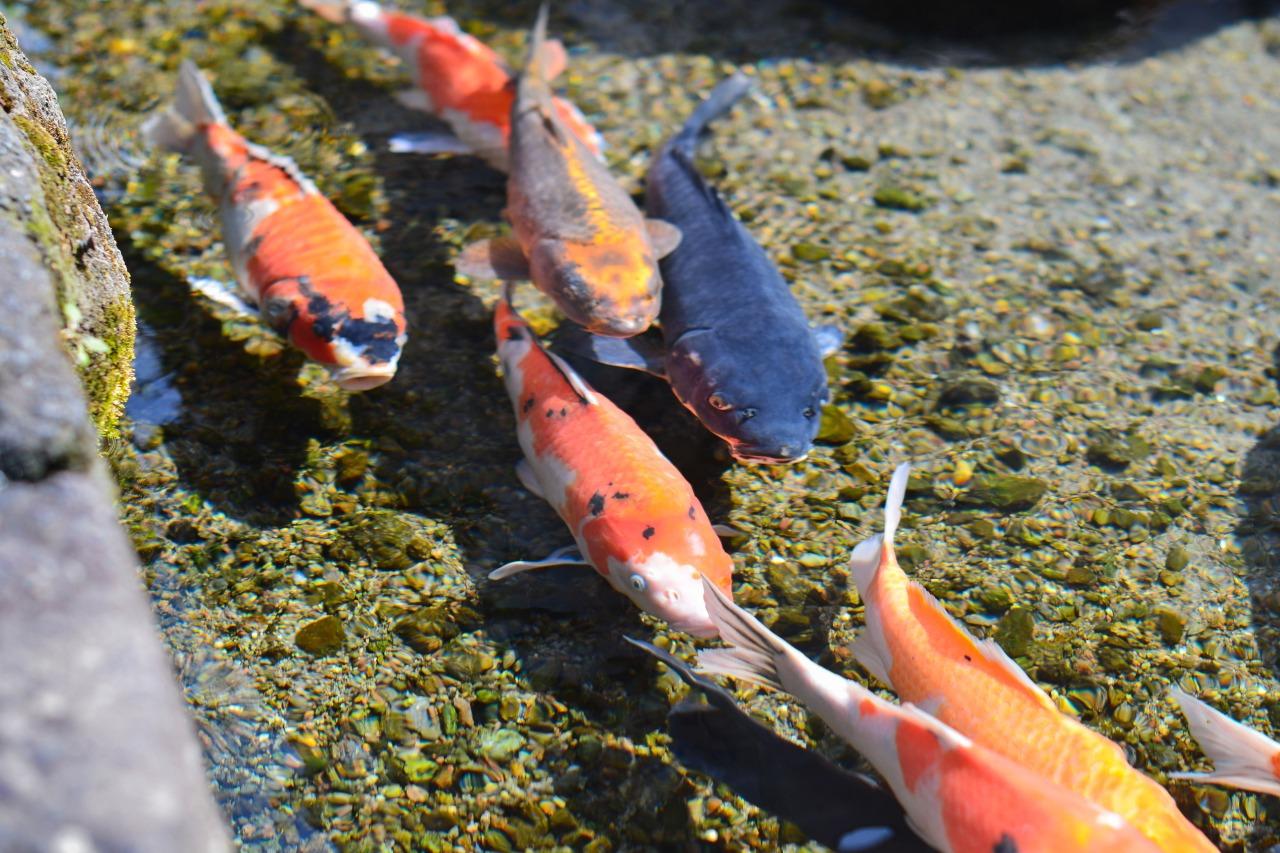
The City of Swimming Carps
The City of Swimming Carp has been carefully preserved by the locals for generations. This picturesque Japanese castle town is known for its natural spring water, and colorful carp that swim in the city canals.View more
Higashi-Yamate and Minami-Yamate: Sloping streets full of fine old Western buildings
These areas, with their networks of undulating slopes that meander up and down, are symbolic of the international atmosphere that characterizes Nagasaki. There is a sense of exploration that comes from a stroll along these stone-paved narrow streets, discovering the Western buildings and churches dotted along the paths.
-
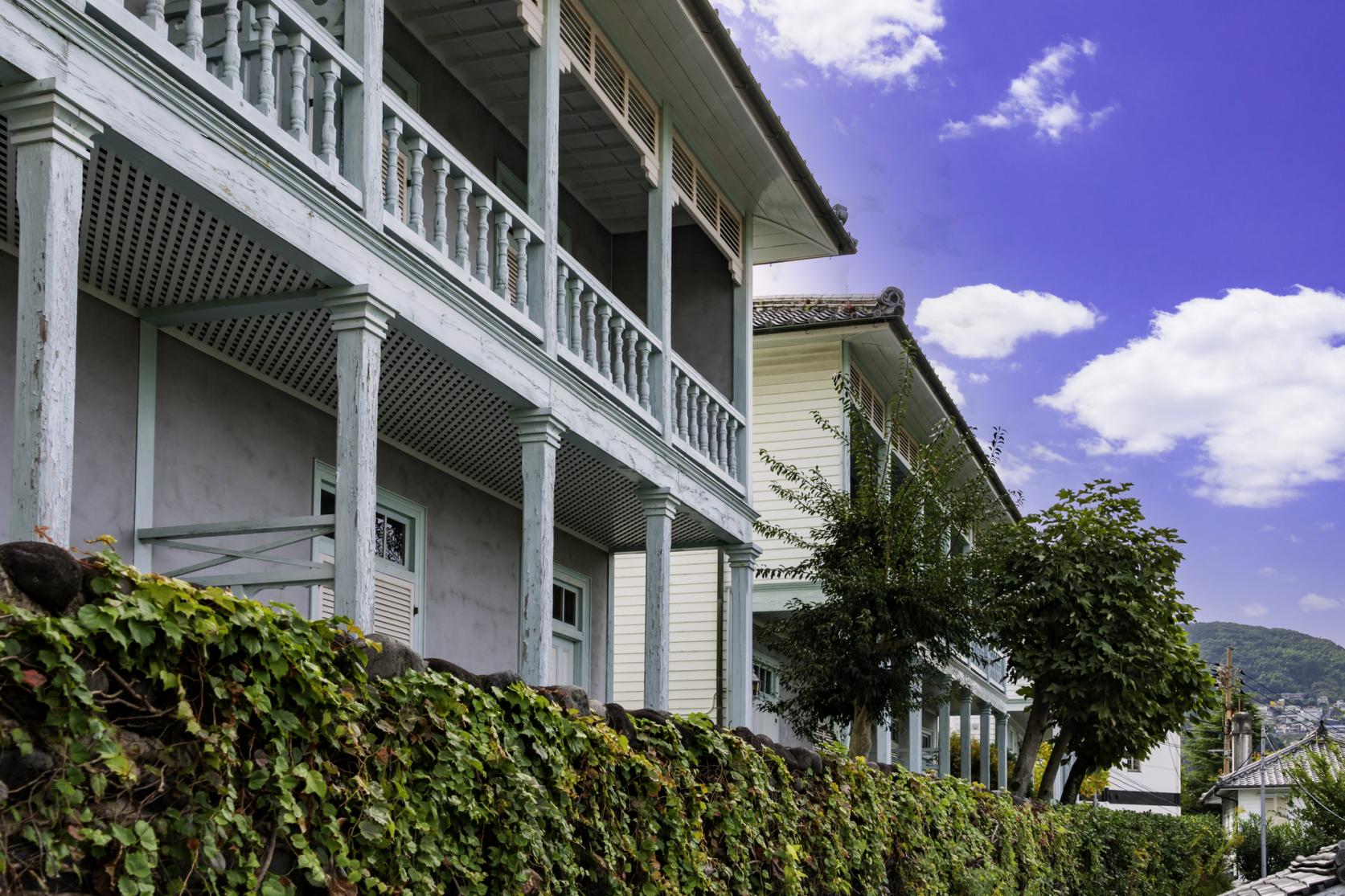
Higashiyamate Western Style Houses (7 buildings)
View moreWalk up the Dutch Slope to find this group of Western-style houses, filled with an exotic feeling. They were built close together on a narrow site on a steep incline, and stand in rows like terrace houses on land developed on two levels. These Western-style wooden structures were created in around the 1890s, and are designed and finished modestly, inside and out. As the construction materials are very similar for each building, we presume that they were built in a systematic way as company or rental housing. At present, six of these are in use, and one, the “Chikyukan” is well-loved as a rest space used by many people of different nationalities as a place for international exchange.
-
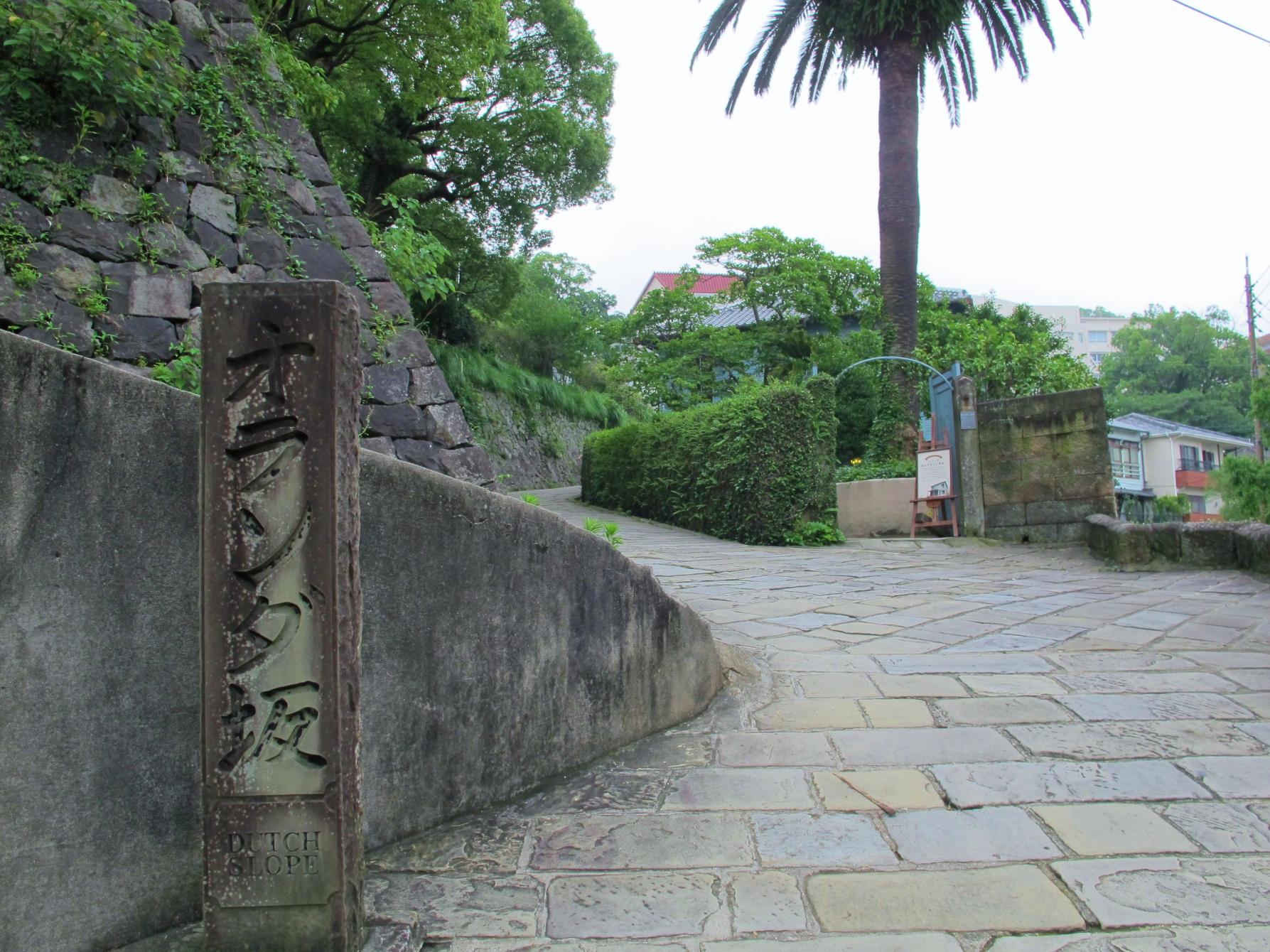
Dutch Slope
View moreA monument to the ruins of the Protestant Church of England is buried in the stone wall at the starting point of the slope rising to the mission school and the Kaisei Senior High School gymnasium that stands on a hill in the Higashi-yamate neighborhood. This is the site of Japan is first Protestant Church of England, which was built in 1862. At the time, the people of Nagasaki referred to all non-Asians as "Hollanders," likely because of the influence of the Dutch who lived on Dejima, even after many foreign residents from countries other than the Netherlands had immigrated to Nagasaki following Japan is opening and the foreign settlement period. Therefore, the entire slope was called "Hollander Slope" at that time.
Nagasaki Shinchi Chinatown: one of Japan's three main Chinatowns
Nagasaki Shinchi Chinatown started as the location of the warehouses used to store goods for Nagasaki's trade with China, a key part of the city's history. Later, as Chinese immigrants began to move into the area, it became a Chinatown with a unique Nagasaki atmosphere. Today's Chinatown is home to around 40 shops and restaurants, and is an exciting neighborhood with lively, busy streets and the mouthwatering aroma of Chinese food.
-
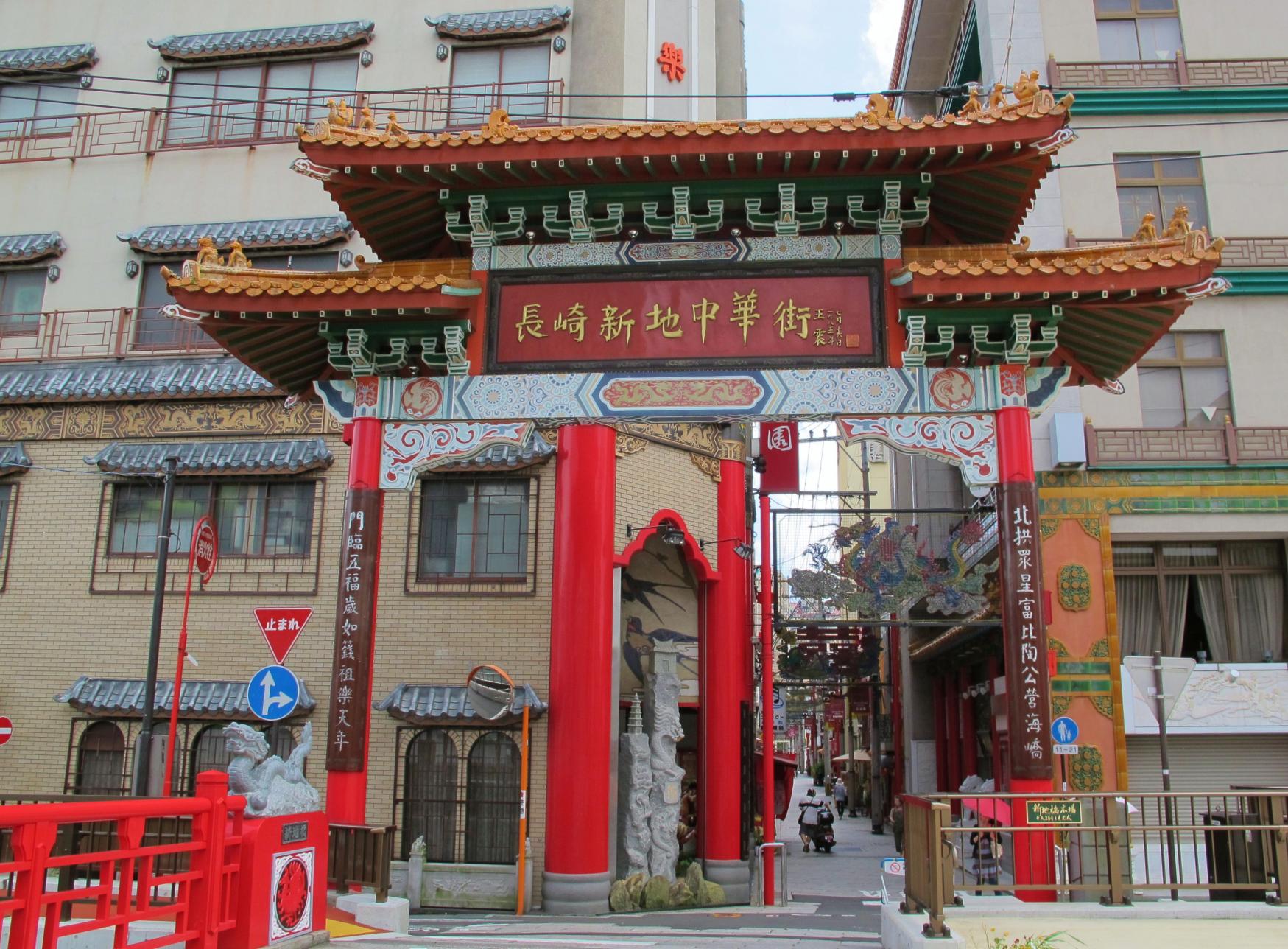
Shinchi Chinatown
The Shinchi area was originally land reclaimed for warehouses used by Chinese boats. Today it is one of Japan’s top three Chinatowns, featuring a total of 250m crisscrossing roads filled with Chinese restaurants, shops and large red Chinese gates.View more -
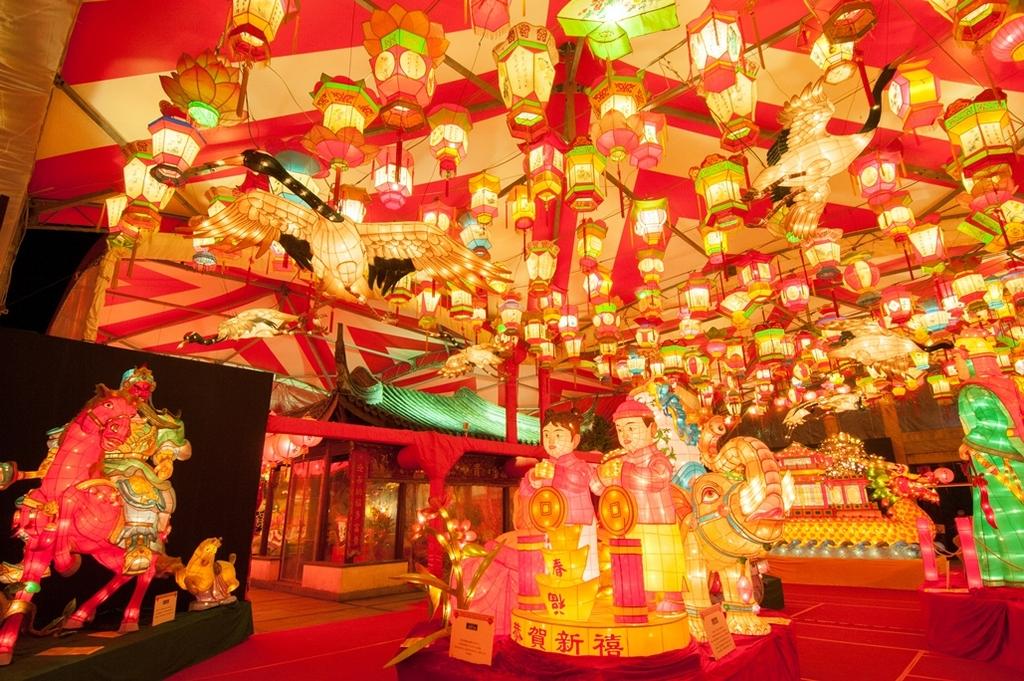
Nagasaki Lantern Festival
View moreBegun as a celebration of the Chinese New Year primarily by the Chinese merchants resident in Nagasaki, the Lantern festival has become a staple winter event in the city, and the largest of its kind in all of Japan.
Over 15,000 colorful lanterns and large art objects adorn the entire city.
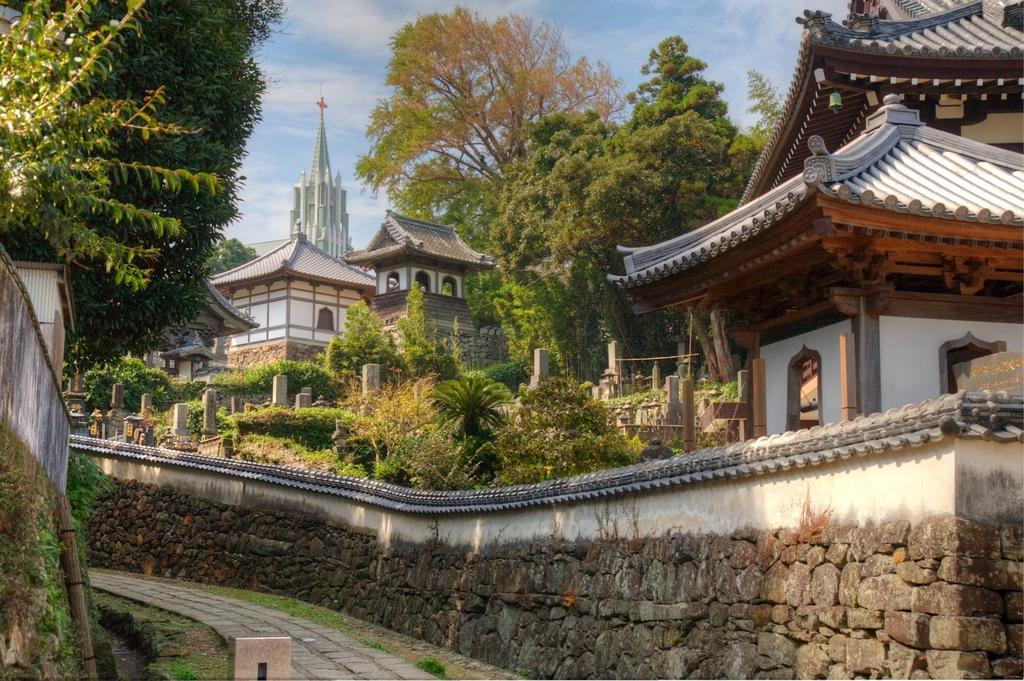
Streetscapes that combine East and West in beautiful harmony
This view of Buddhist temples around a church has come to stand as one of the symbols of Hirado, a city in the north of Nagasaki Prefecture. The church stands atop a hill, surrounded by several temples which spread outwards around it, a sight which truly captures the diverse religious history of this city.
View moreMust-eat foods to try in Nagasaki
From fresh seafood to authentic wagyu beef, from champon noodles to Sasebo burgers, Nagasaki is home to a wide array of special local delicacies. Let's explore some of the food delights that will add some special moments to your visit, covering everything from traditional dishes to dessert items.
-
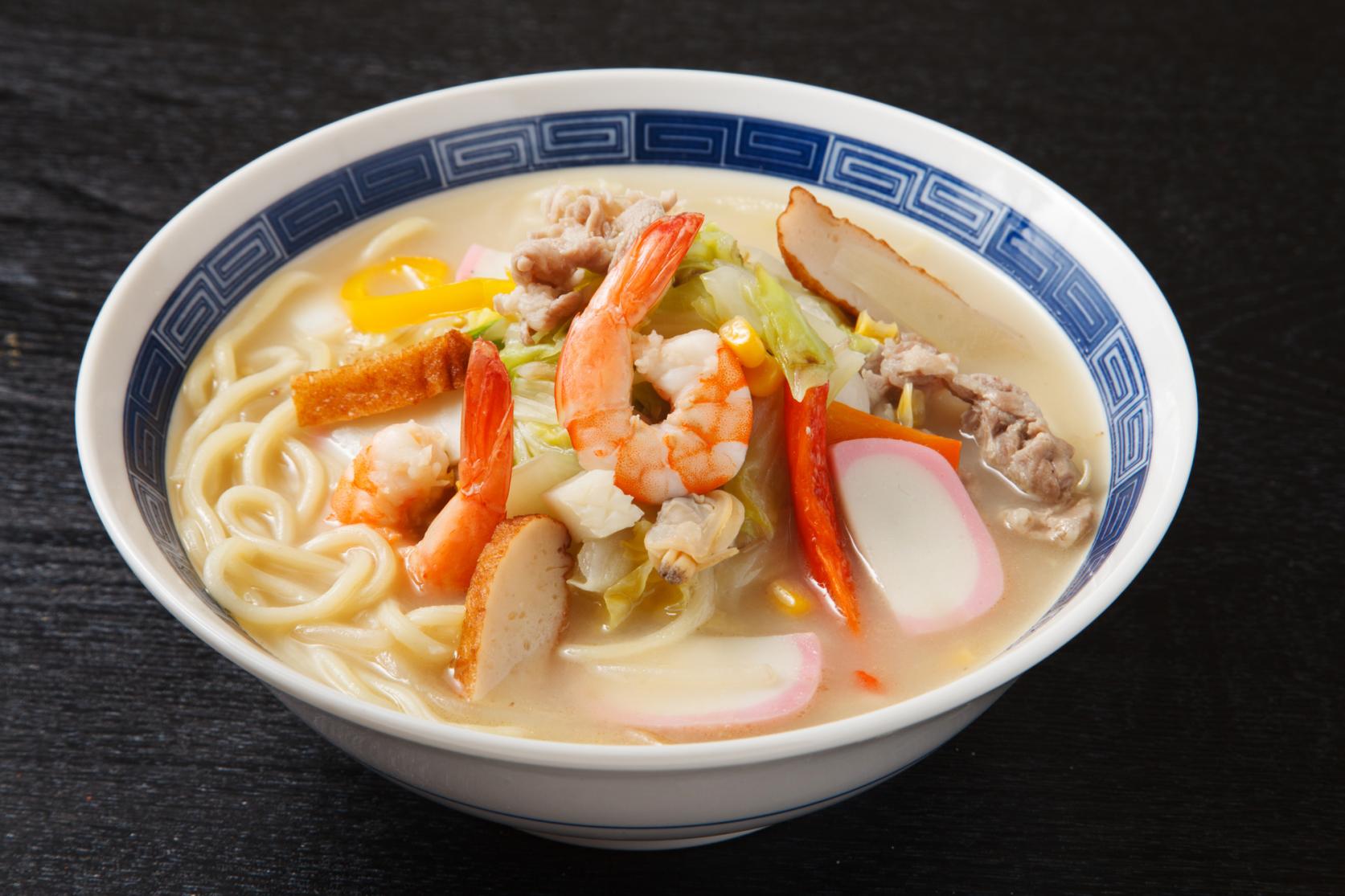
Nagasaki Champon
At the mention of Nagasaki, many people in Japan immediately think of Champon. This dish is loved not only by tourists, but also the locals as well.
Champon is a noodle dish packed with vegetables, pork and seafood in a rich creamy broth made from pork and chicken bones. The dish was created in the Meiji Period by a local Chinese restaurant that wanted to provide a low-cost yet highly nutritious meal for the local Chinese students. -
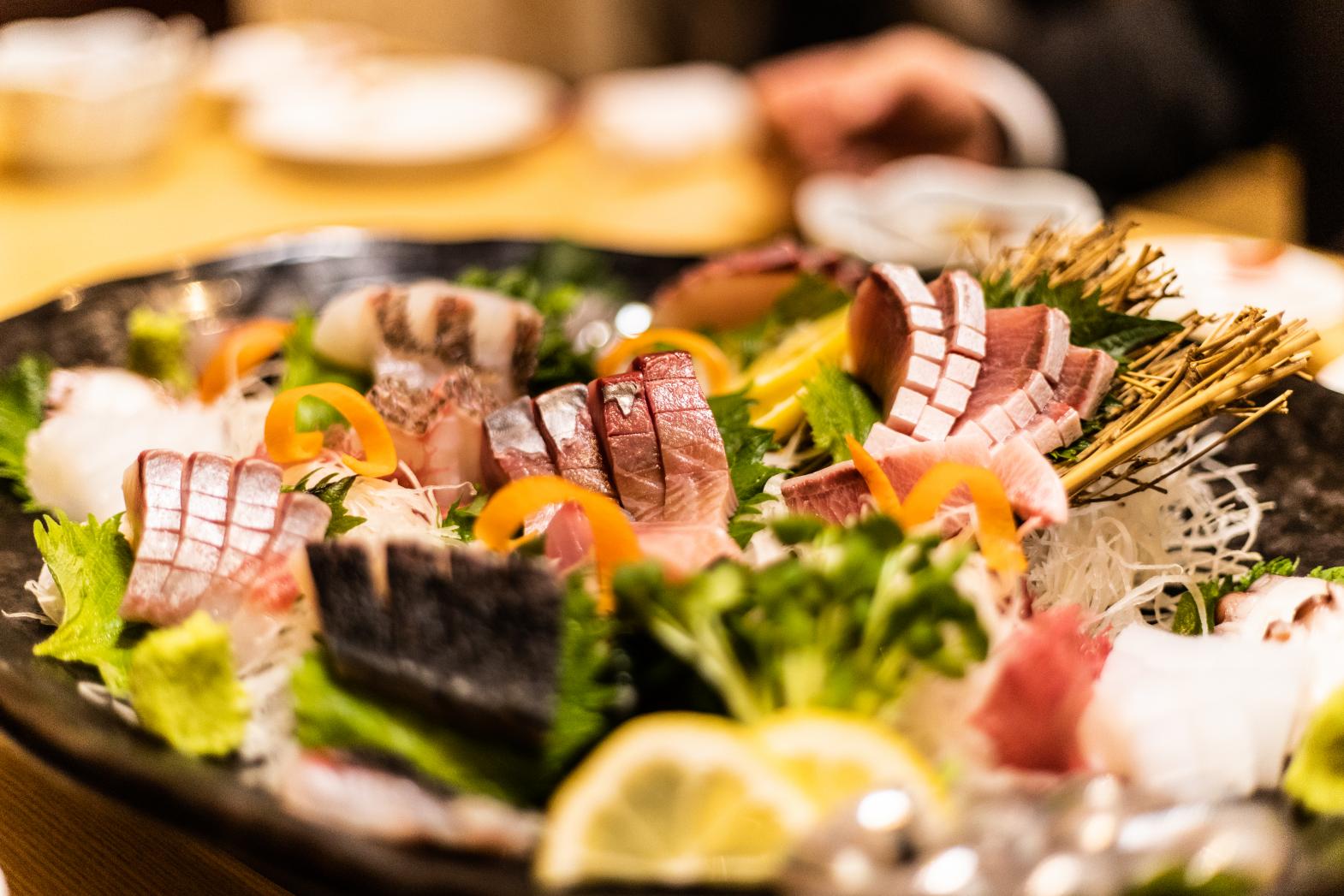
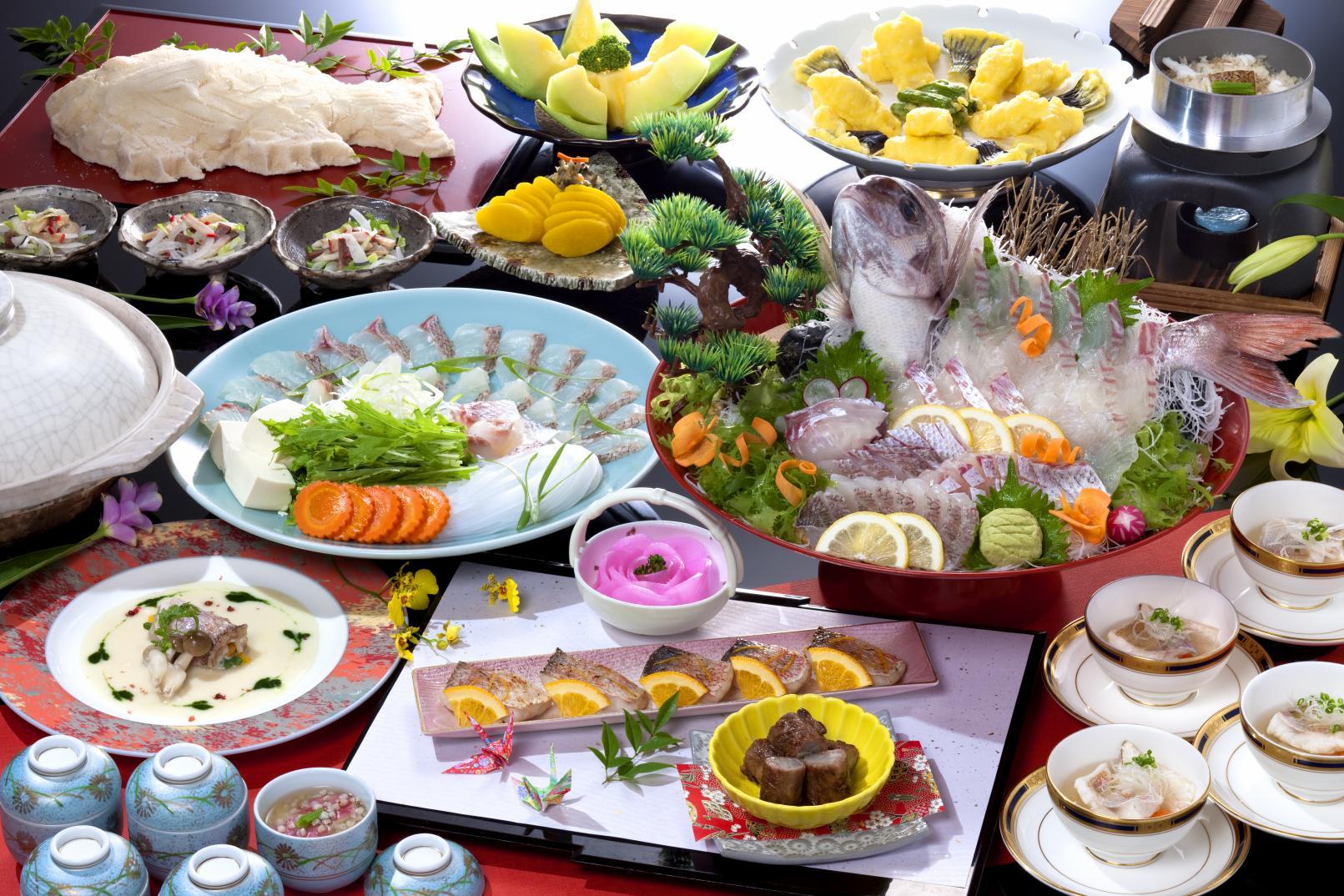
Seafood cuisine
Encircled by the sea, Nagasaki Prefecture is a treasure-trove of seafood cuisine, with restaurants offering more than 300 types of fish which are caught year-round. Try the local sushi, sashimi, nabe (hot-pot cuisine) and other dishes, to experience seafood with the kind of freshness that can only be enjoyed at the place where it was caught.
-
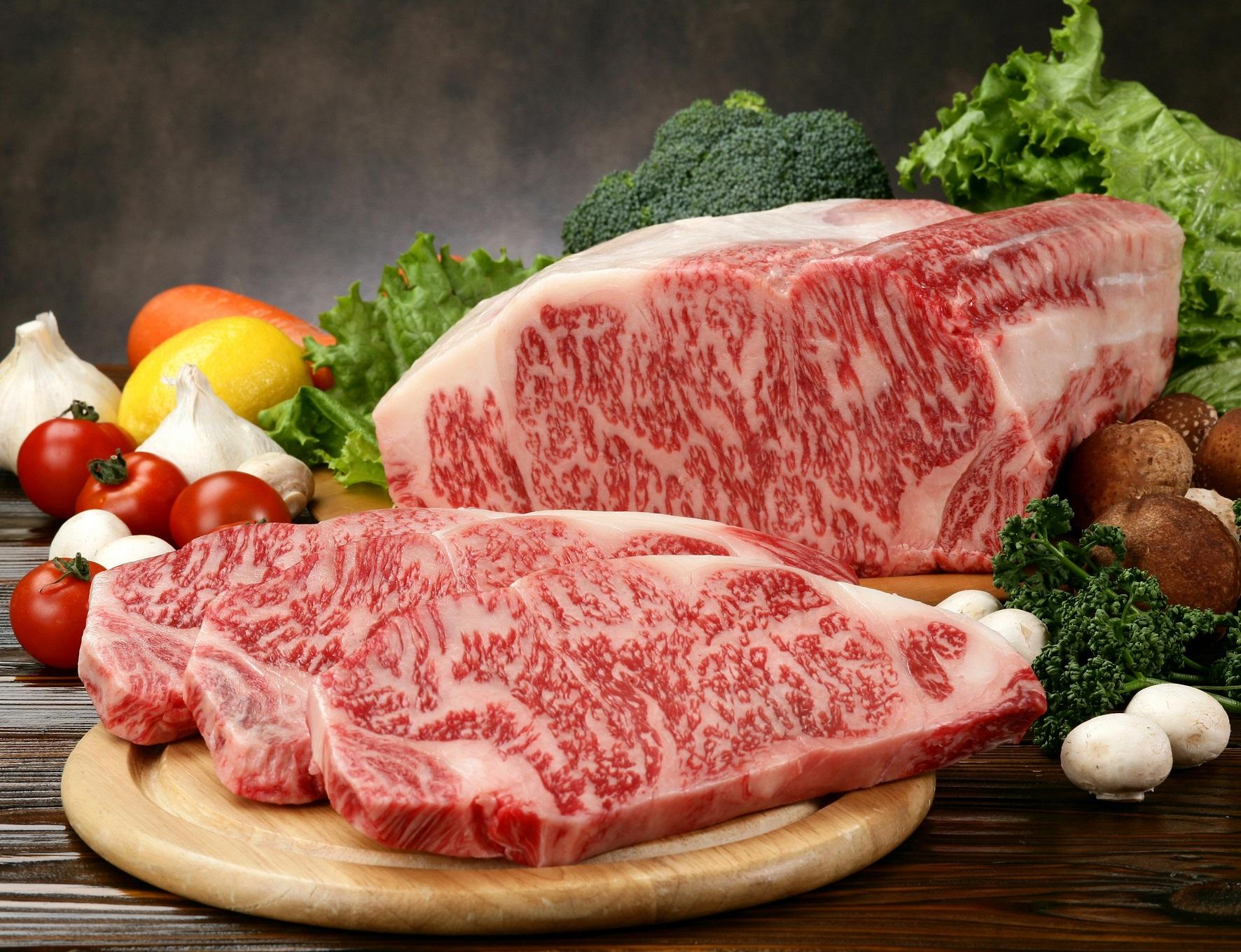
Nagasaki Wagyu (Japanese beef)
Every five years, the National Japanese Beef Quality Competition (also referred to as the "Wagyu Olympics") is held in Japan. In 2012, the "Nagasaki Wagyu" beef won the Prime Minister's Award, earning recognition as the best Wagyu in Japan.
The superb balance between the lean and marble meat in Nagasaki Wagyu provides a juicy and tender texture to the meat - a must-try for meat lovers! -
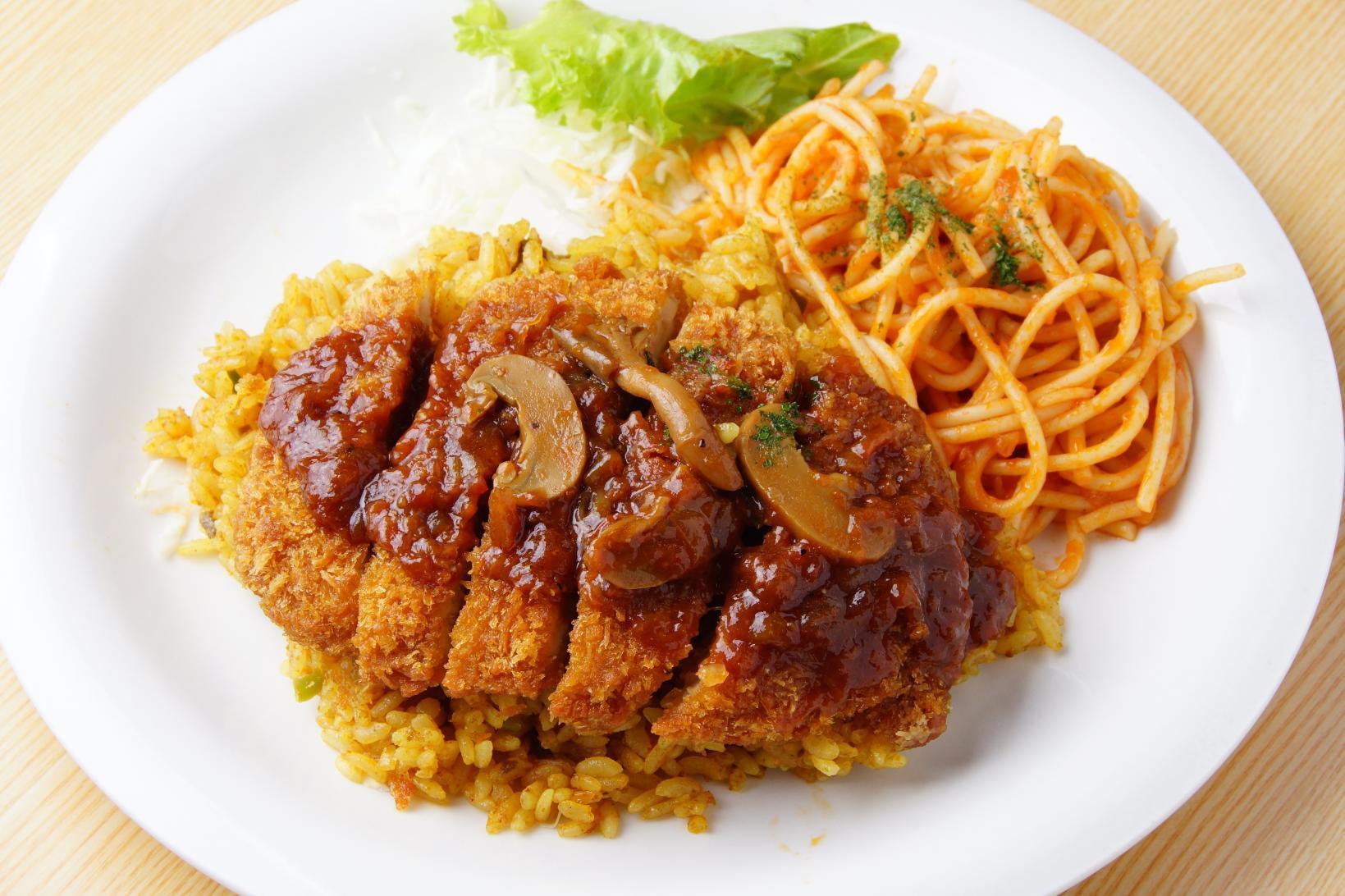
Toruko Rice
"Toruko Rice" is a Western-inspired dish created in Nagasaki City. This dish consists of pilaf rice, spaghetti, and pork cutlets that are generously covered in sauce such as demi-glace sauce, curry and etc. Each restaurant uses a slightly different mix of ingredients, toppings and sauce, creating many variations of this dish.
-
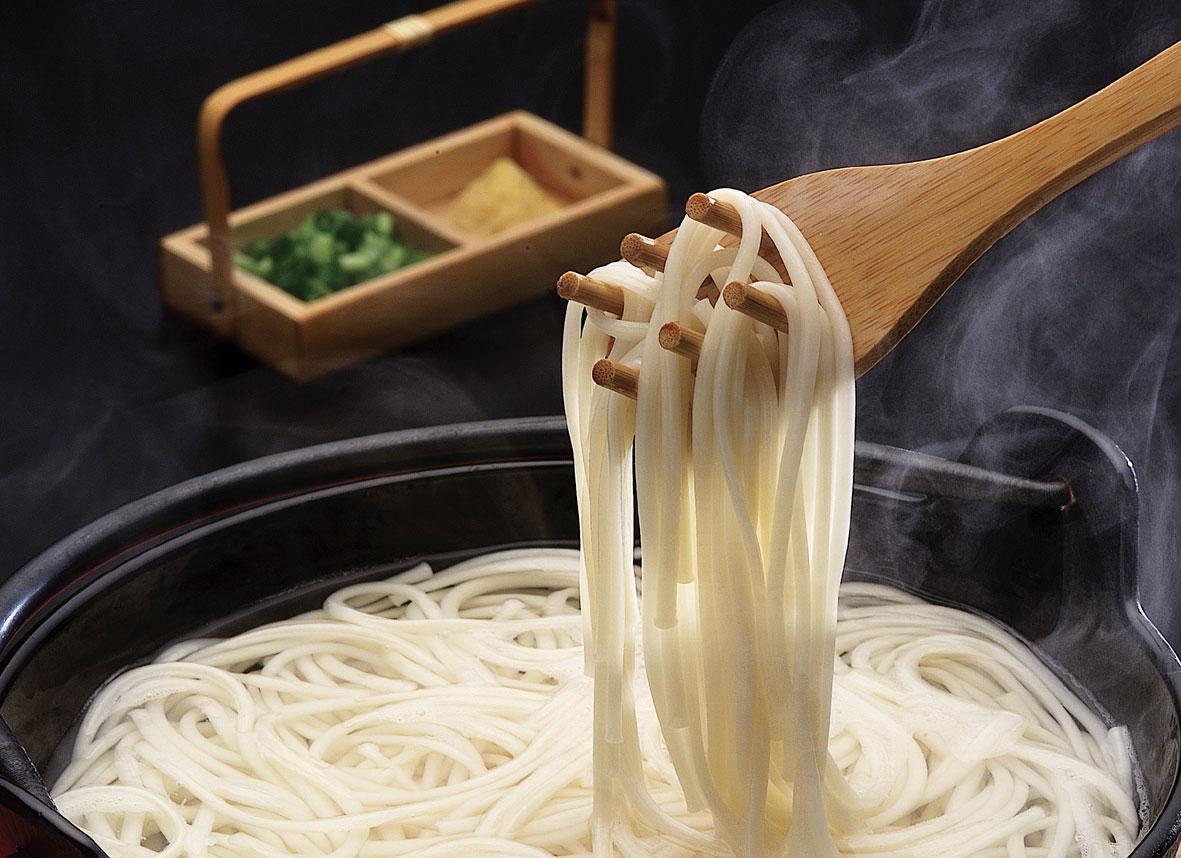
Goto Udon (thick wheat noodles)
Goto Udon is one of the top three famous udon noodles in Japan. This speciality noodle is unique to the islands of Goto (literally meaning five islands), and it is only produced on the Goto. Skinny yet firm, these udon noodles are known for their nice, smooth texture. The recommended serving method is straight from the pot, then eaten with broth and egg.
-

Sasebo Burger
Sasebo Burger is said to have originated around the 1950s, when the U.S. Navy directly introduced the recipe to the area. Although it was initially sold near the base for American personnel, it gradually became soul food even by the locals.
Today, more than 25 restaurants offer their own unique Sasebo Burger. Try it and enjoy the different tastes of each shops.
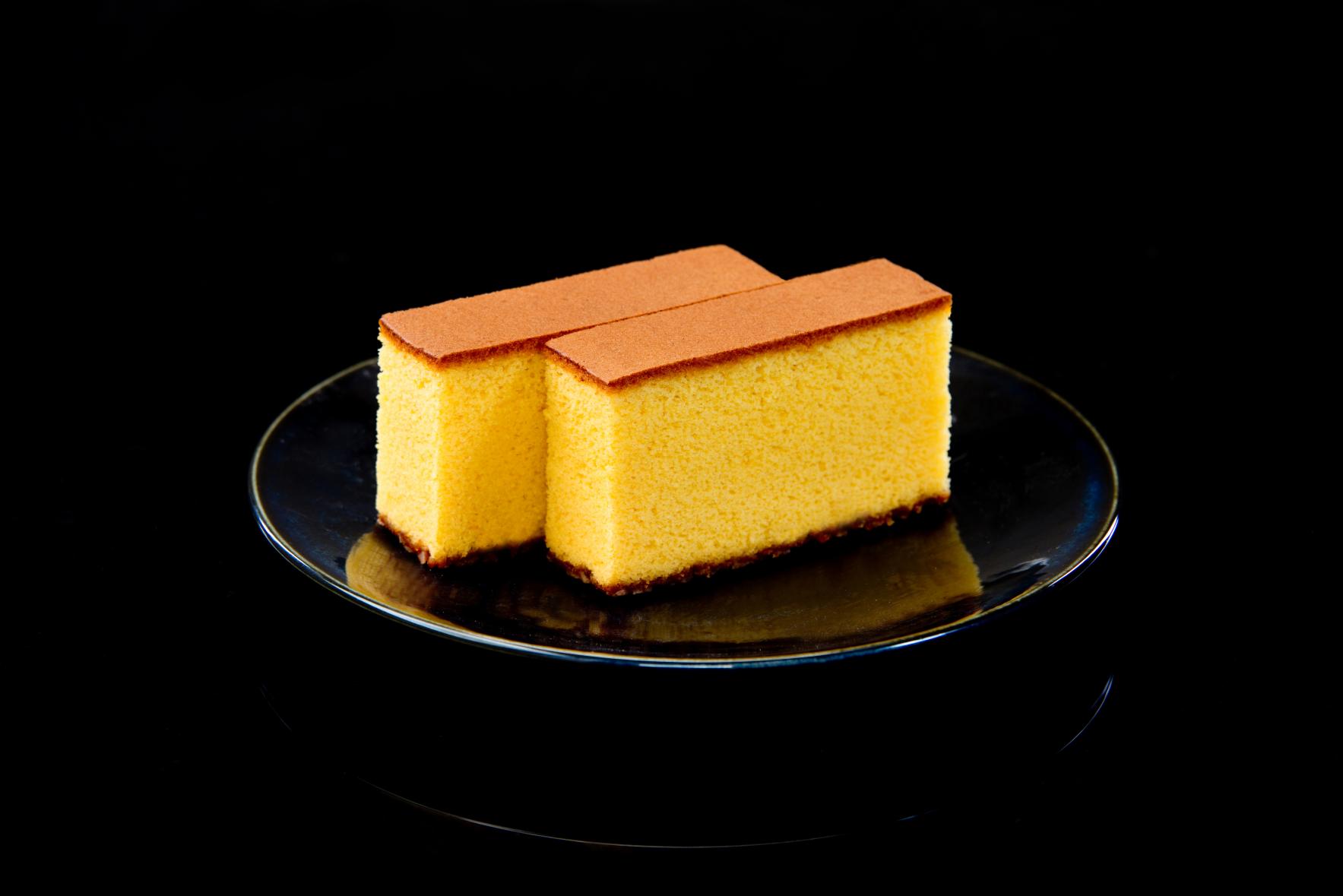
A sweet treat that's always a Nagasaki favorite: Castella
As Nagasaki flourished as Japan's only international trading port during the country's isolation period (1639 to 1853), sugar was brought into the city in large amounts, resulting in the creation of many sweet treats such as castella—a moist sponge cake seasoned with syrup. As a long-established local favorite in Nagasaki, this cake can be tasted at many cafes and other establishments: the perfect way to enjoy a break and a touch of sweetness between sightseeing spots.
Featured topic: SouvenirsExploring other prefectures around Nagasaki
Many more exciting sightseeing spots are to be found all over the Kyushu region where Nagasaki is located. Having made the trip to Nagasaki, why not take the opportunity to explore some of these areas as well?
- Fukuoka Prefecture
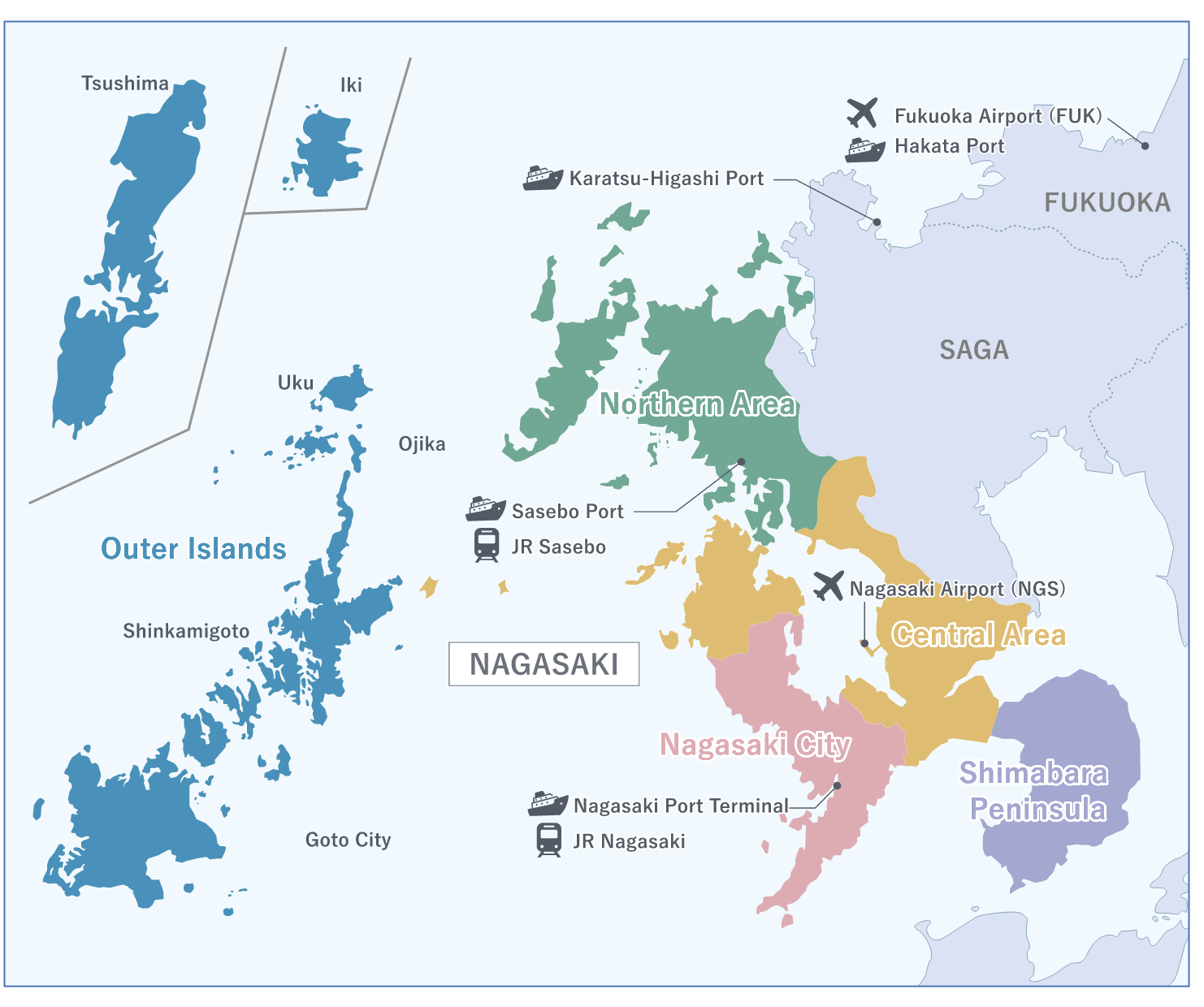
Home to Fukuoka Airport and Hakata Port, Fukuoka Prefecture is the gateway to the Kyushu region as well as Kyushu's largest economy. Fukuoka Prefecture is easily accessed from Nagasaki Prefecture's major cities by rail or highway bus; there are also flights and sea routes connecting some of Nagasaki Prefecture's islands directly with Fukuoka.
-
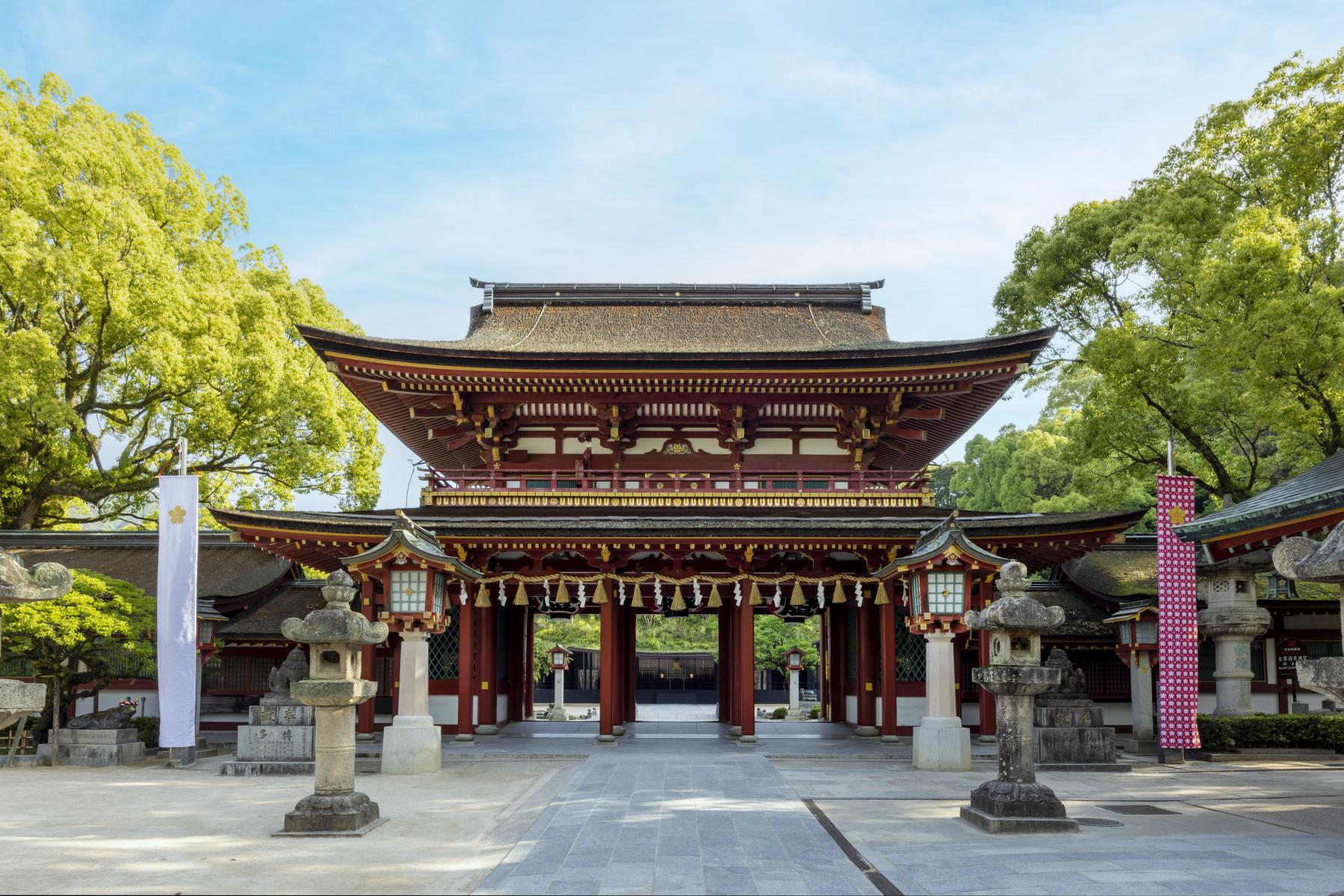 Dazaifu Tenmangu
提供:太宰府天満宮
-
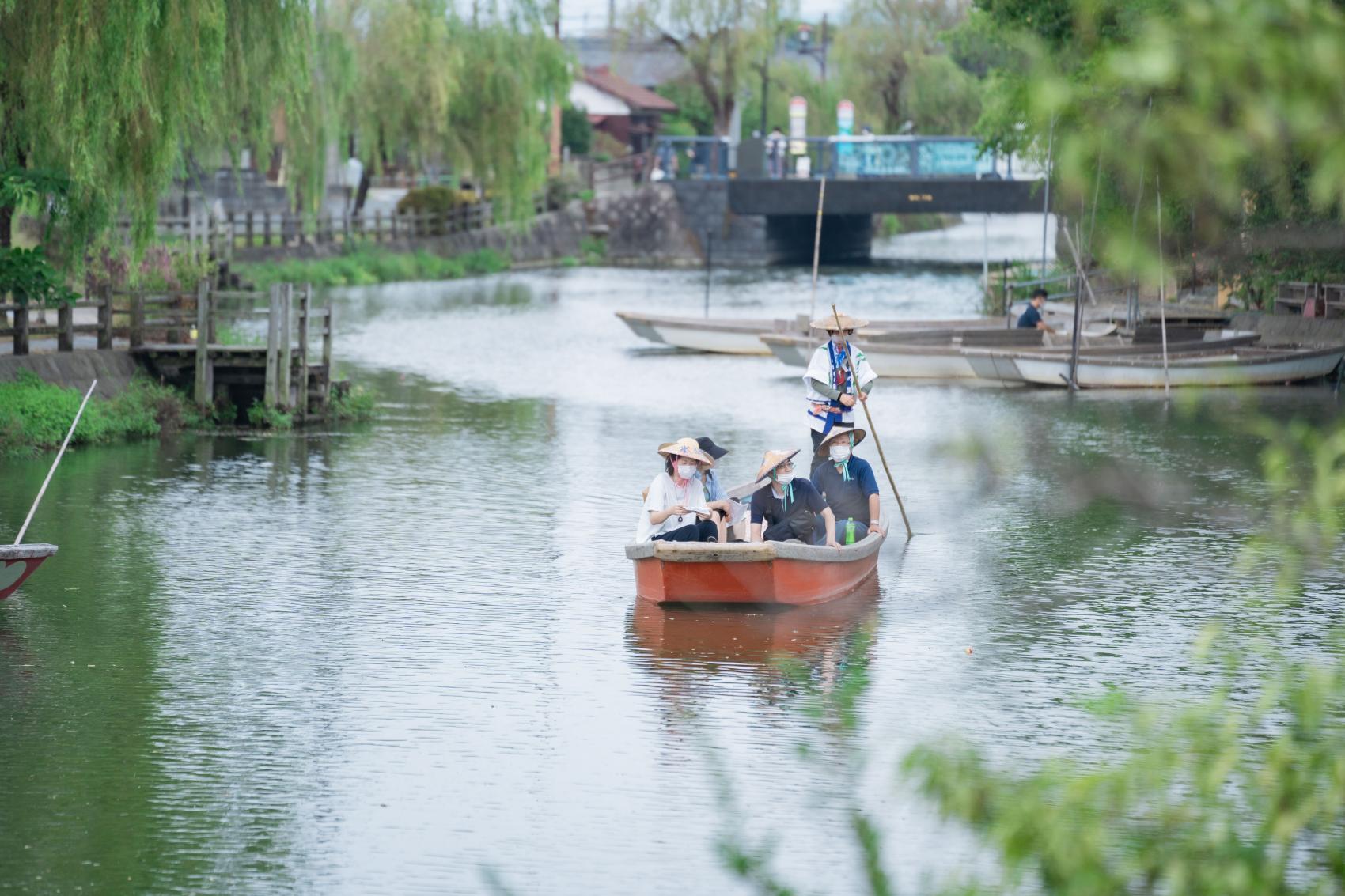 Yanagawa River Cruise
©Fukuoka Prefecture Tourism Association
-
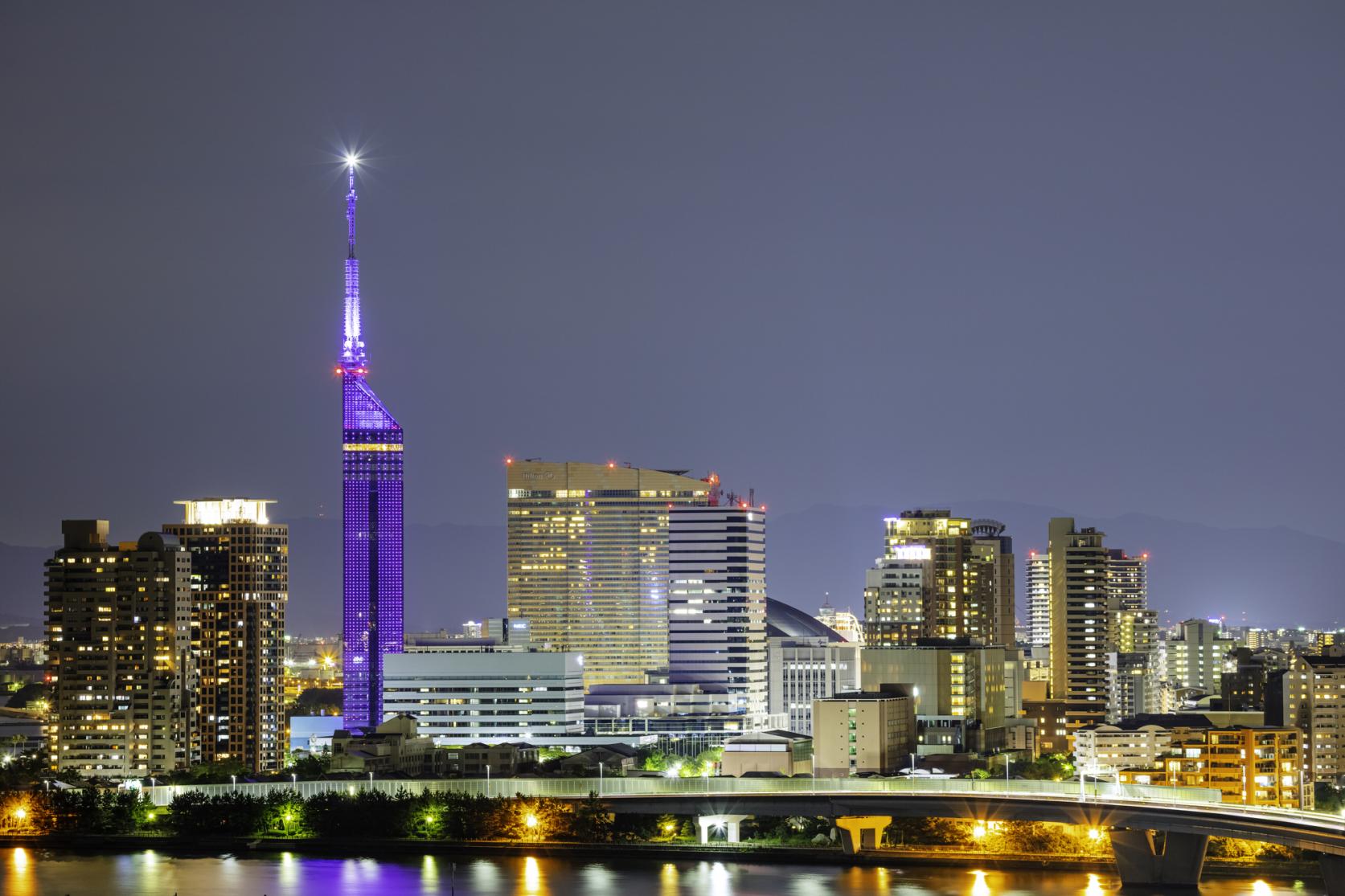
Fukuoka Tower surrounded by tall buildings
-
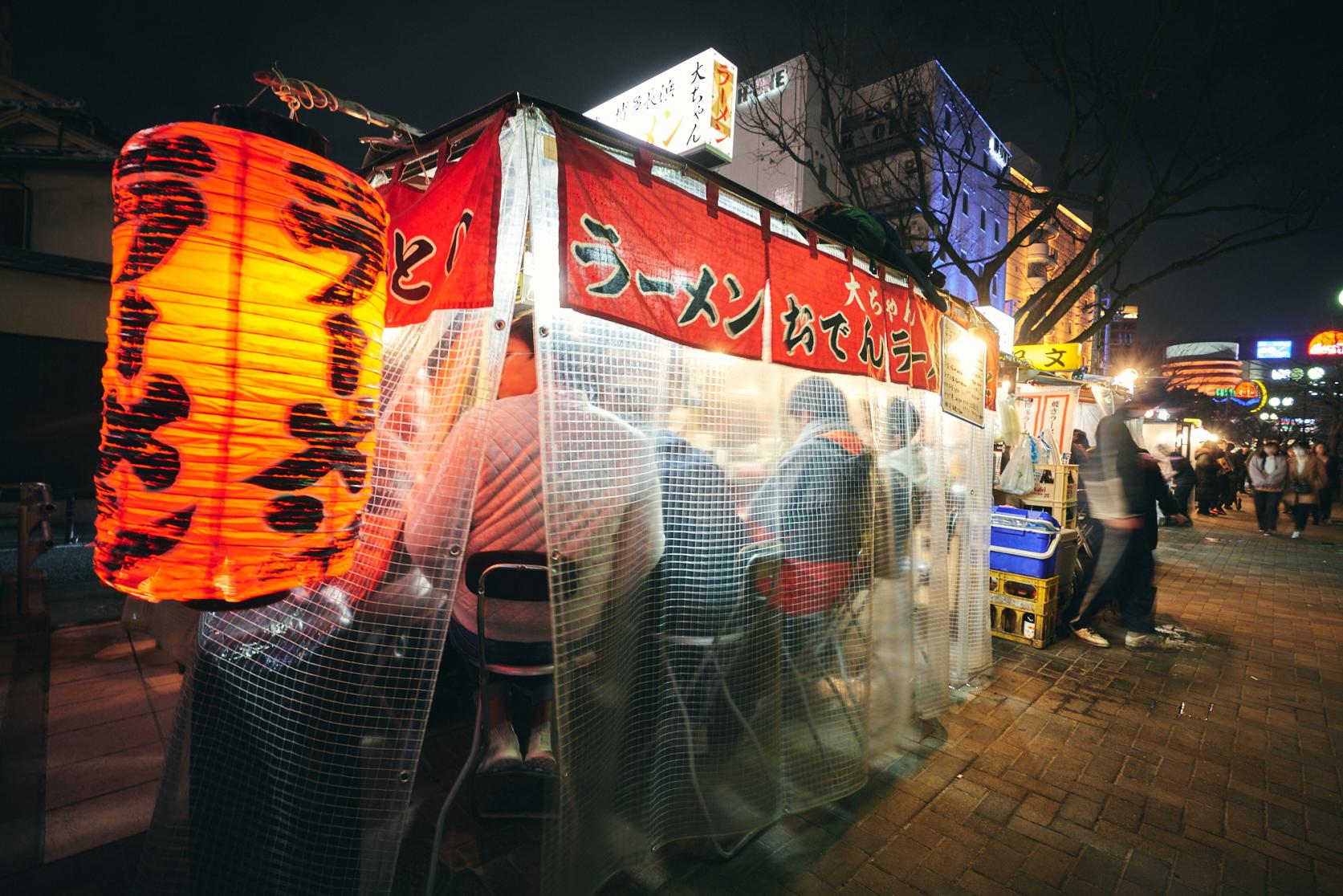
Stalls selling Hakata ramen and other foods
©Fukuoka Prefecture Tourism Association
- Kumamoto Prefecture
Kumamoto Prefecture is located in central Kyushu, and is famous for Mt. Aso, a volcano featuring a caldera (a type of volcanic hollow) that is one of the world's largest. This prefecture can be reached by rail or by a highway bus running between Nagasaki City and Kumamoto City. Alternatively, visitors starting from Shimabara Peninsula in southern Nagasaki Prefecture can access both Kumamoto City and Amakusa City by ferry in as little as 30 minutes.
-
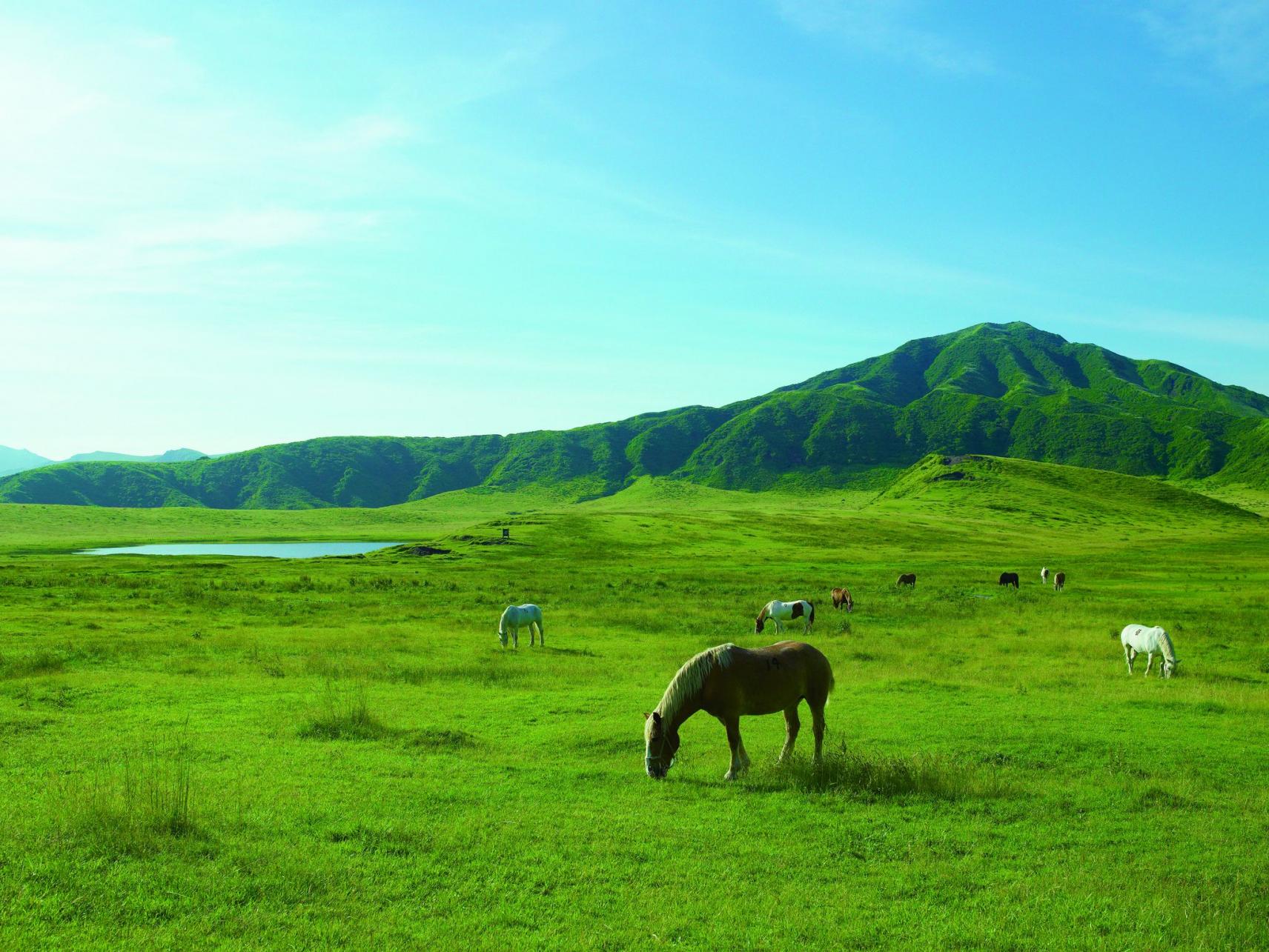
Mt. Aso
©熊本県観光連盟
-
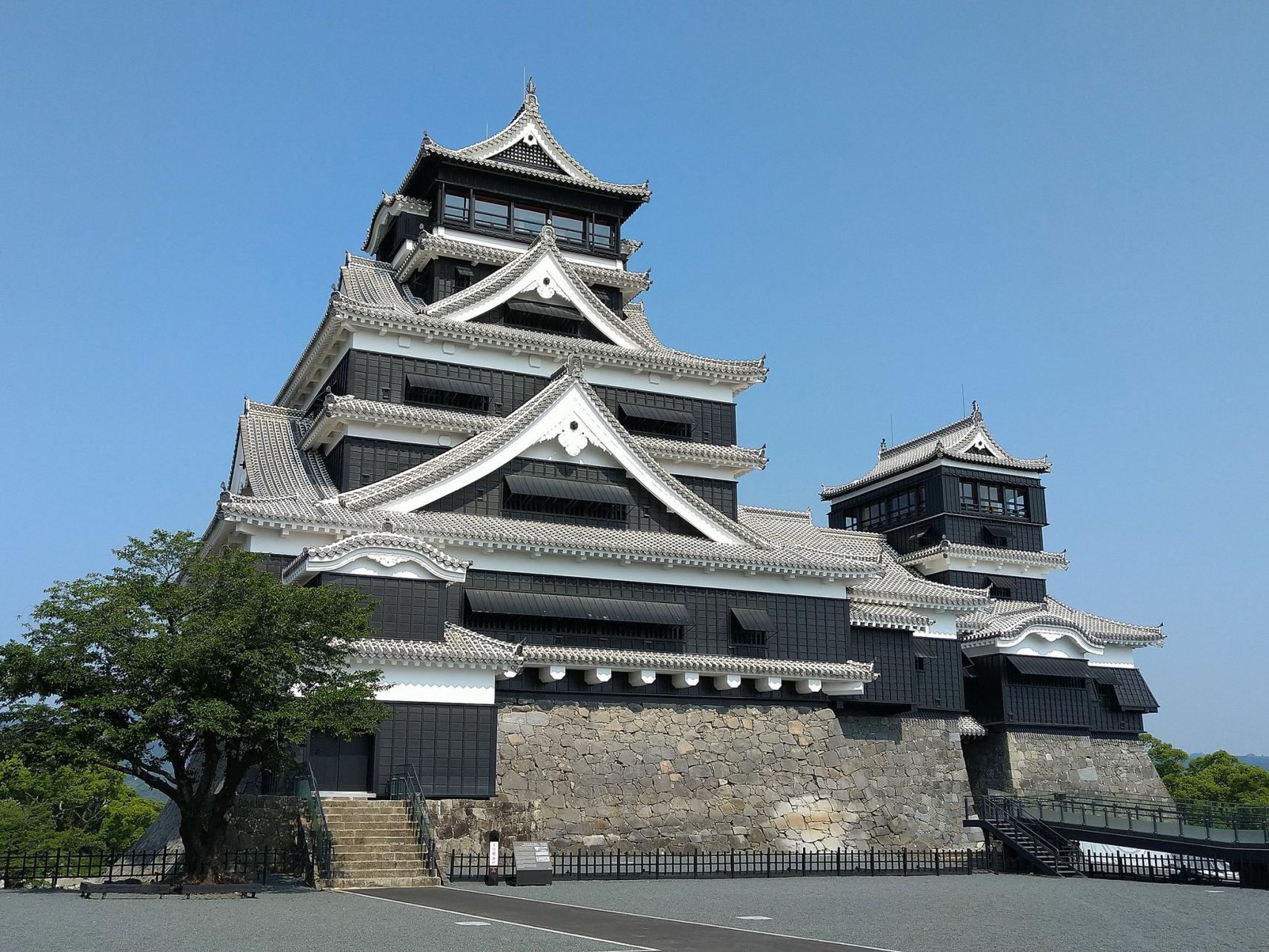
Kumamoto Castle
©熊本県観光連盟
-
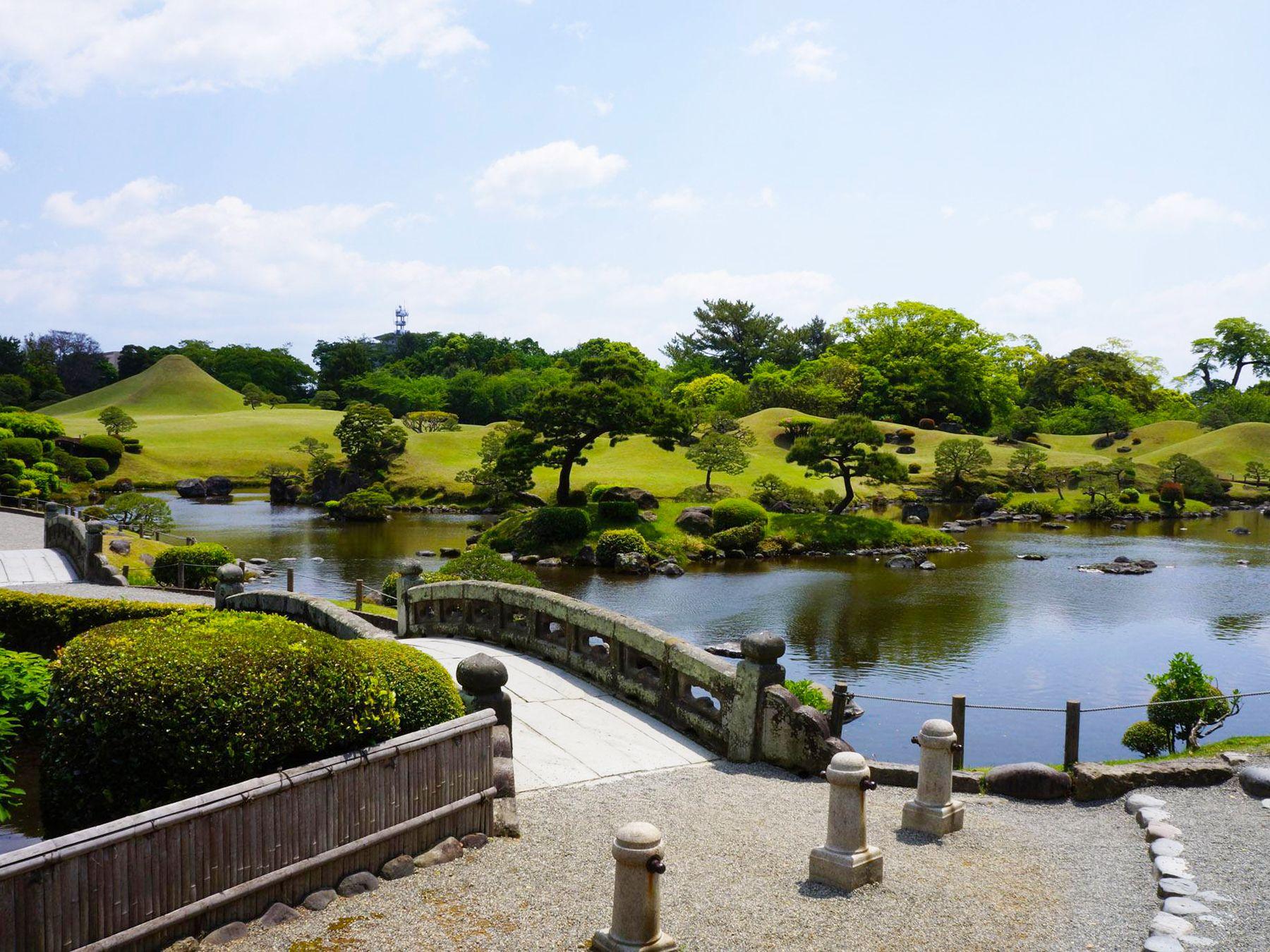
Suizenji Jojuen Garden
©熊本県観光連盟
-
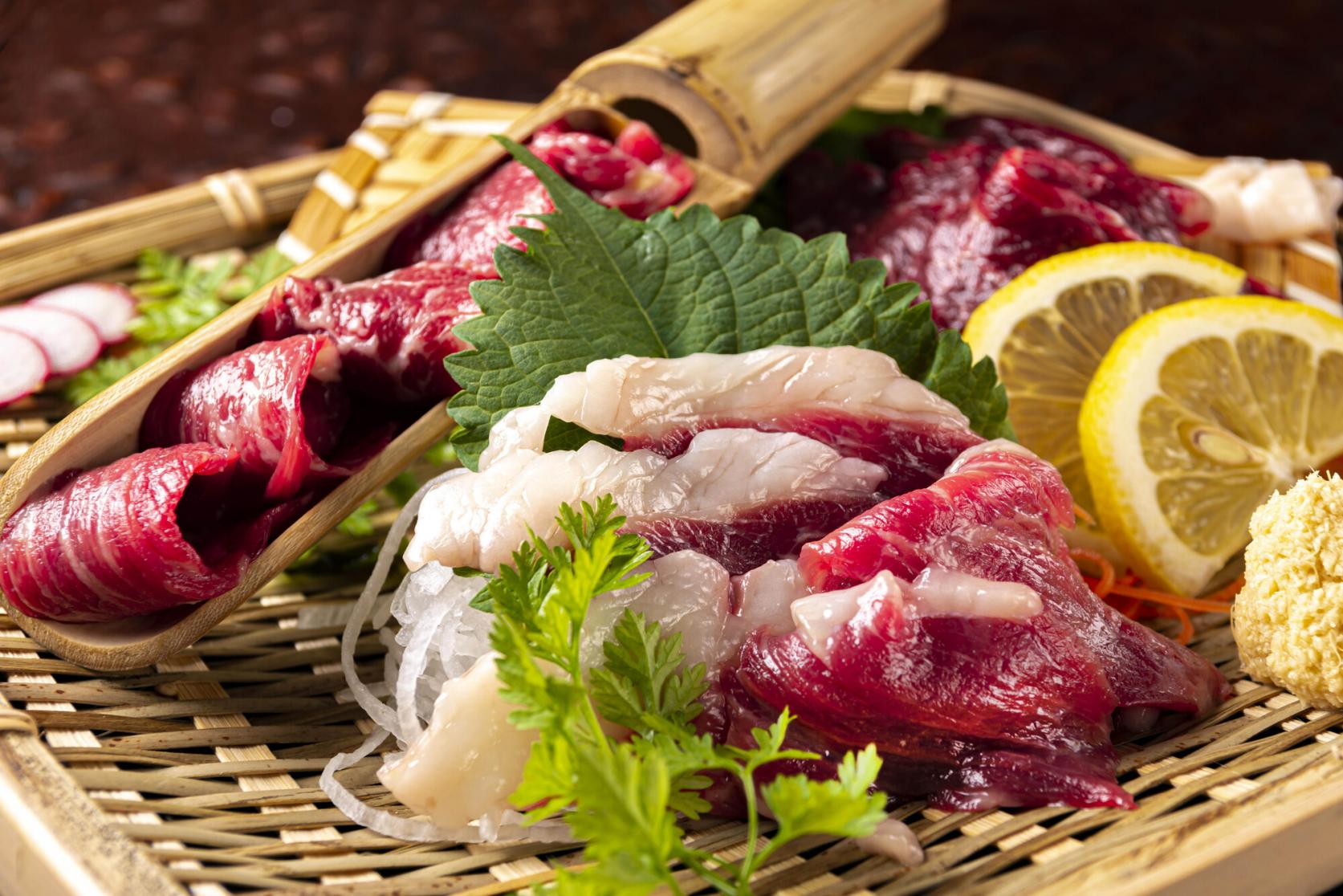
Horsemeat cuisine
- Oita Prefecture
Located in eastern Kyushu, Oita Prefecture is home to many of Japan's finest hot springs, found in resorts such as Beppu and Yufuin. As getting there from Nagasaki by train involves changing lines more than once, visitors are recommended to take the highway bus from Nagasaki City center.
-
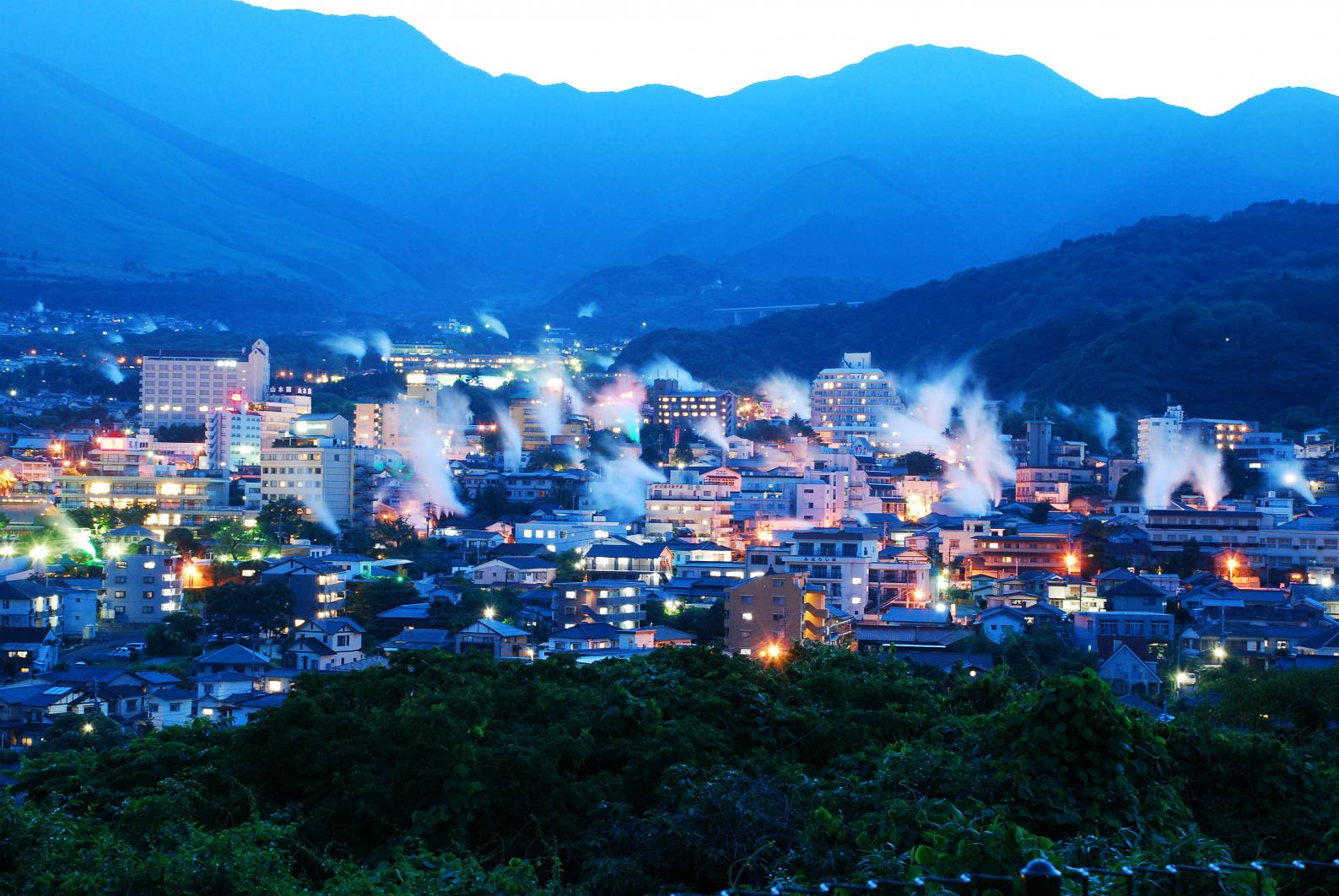
Beppu
-
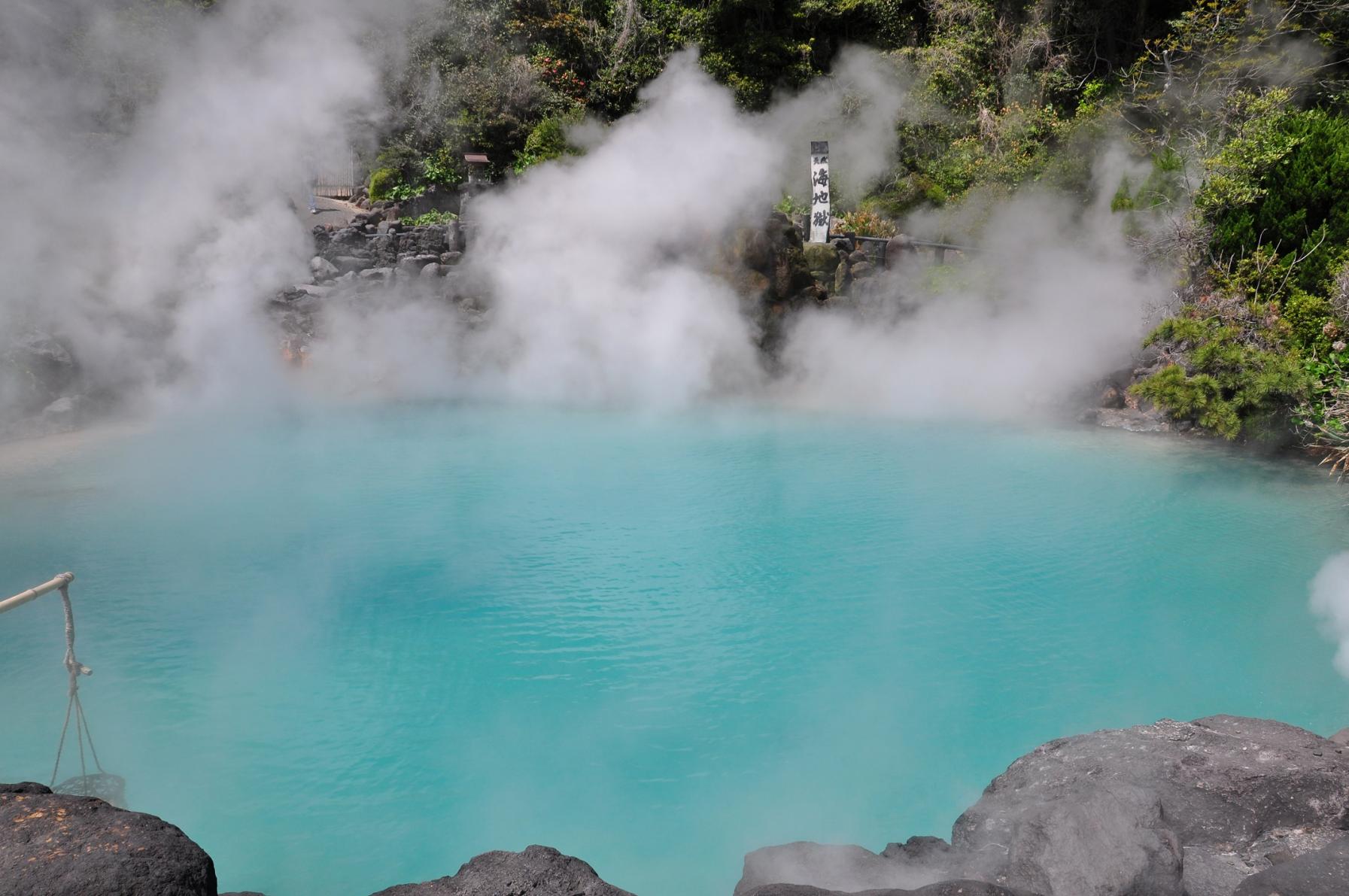
Umi Jigoku (Sea Hell)
-
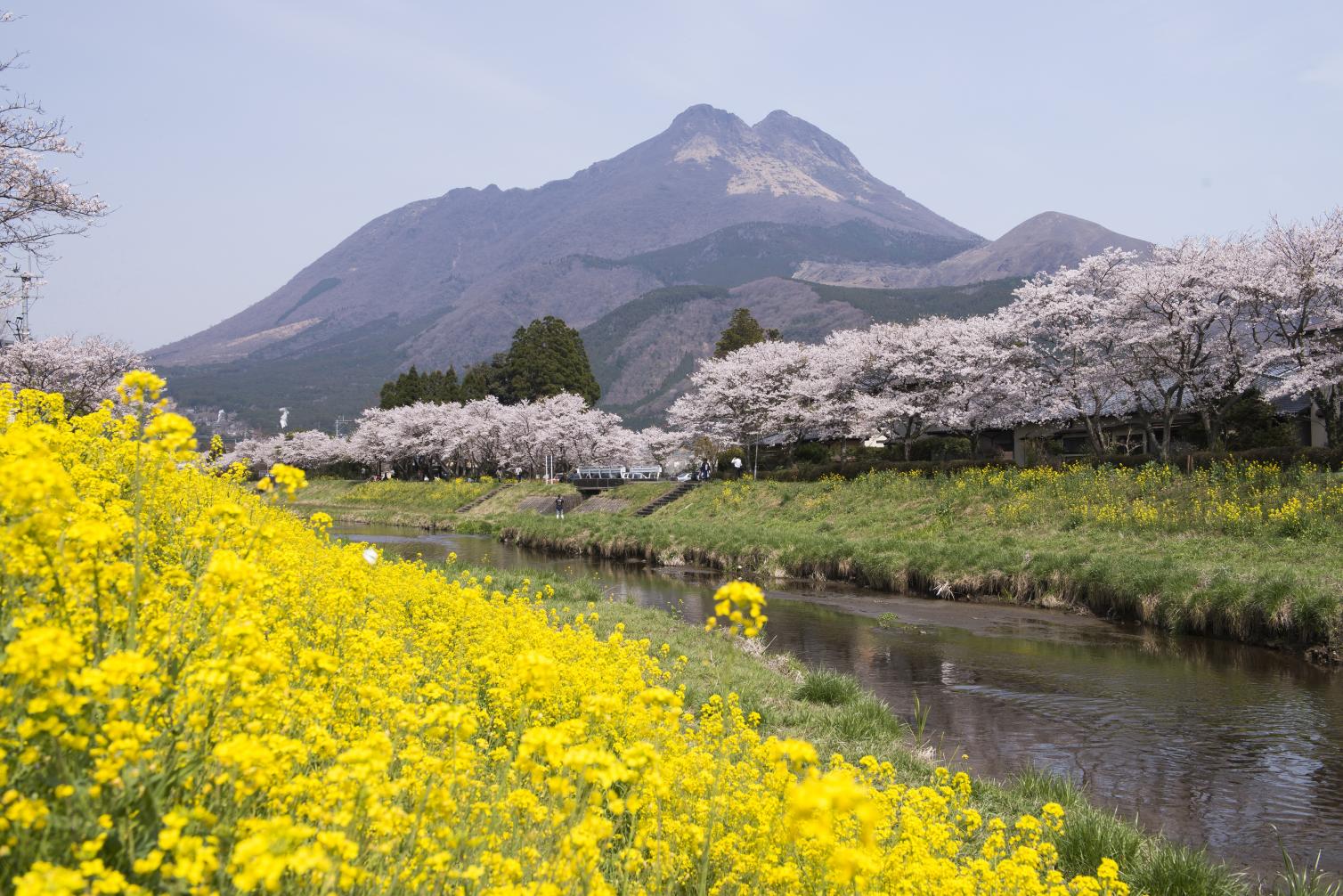
Yufuin
-
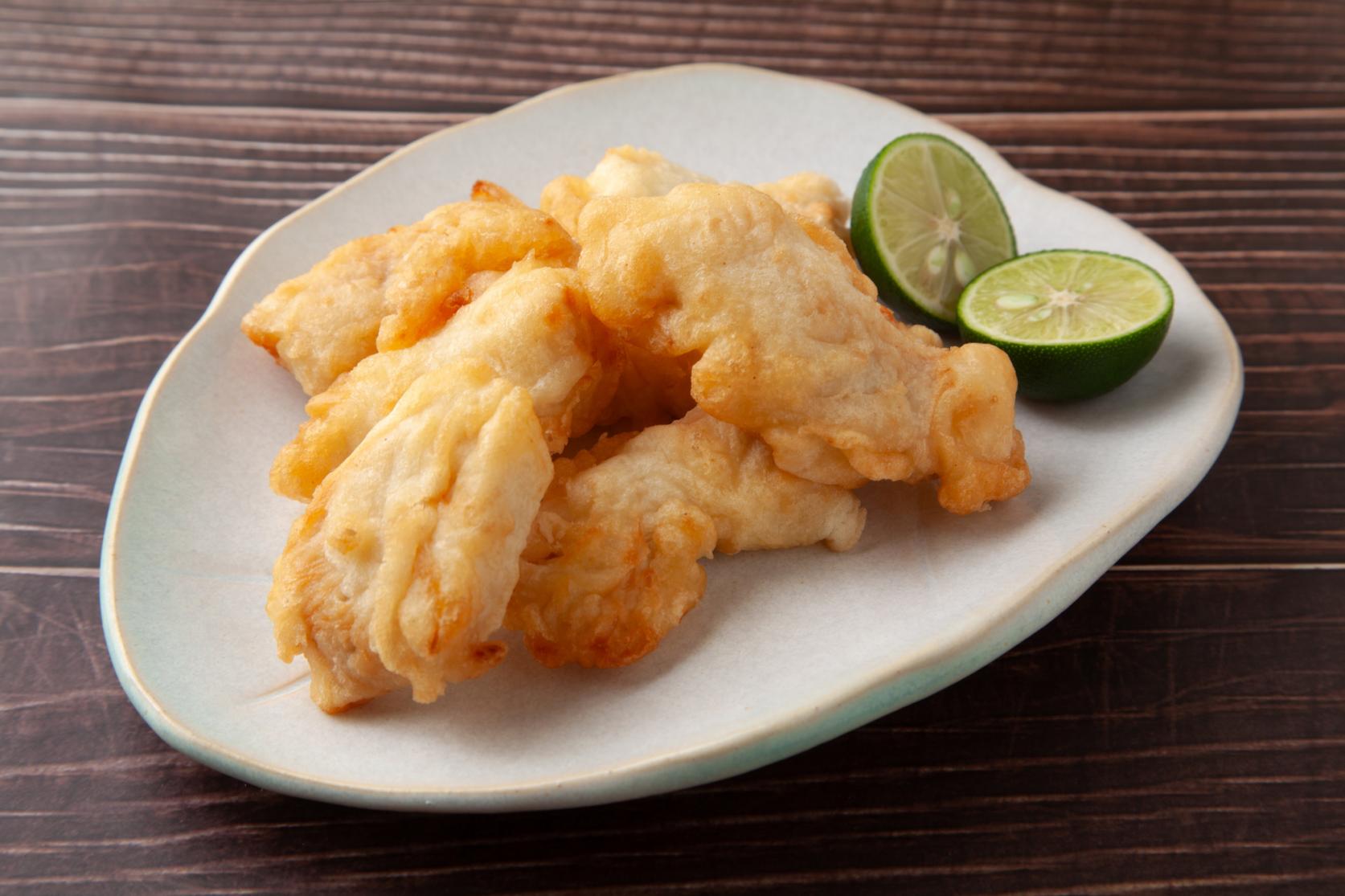
Toriten (Chicken tempura)
- Kagoshima Prefecture
Kagoshima Prefecture, which is located at the southernmost point of Kyushu, is famous for Mt. Sakurajima where visitors can observe dramatic volcanic activity. Most travelers get to Kagoshima from Nagasaki by rail, using both the shinkansen and limited express trains. (Currently, no highway bus connects these cities.)
-
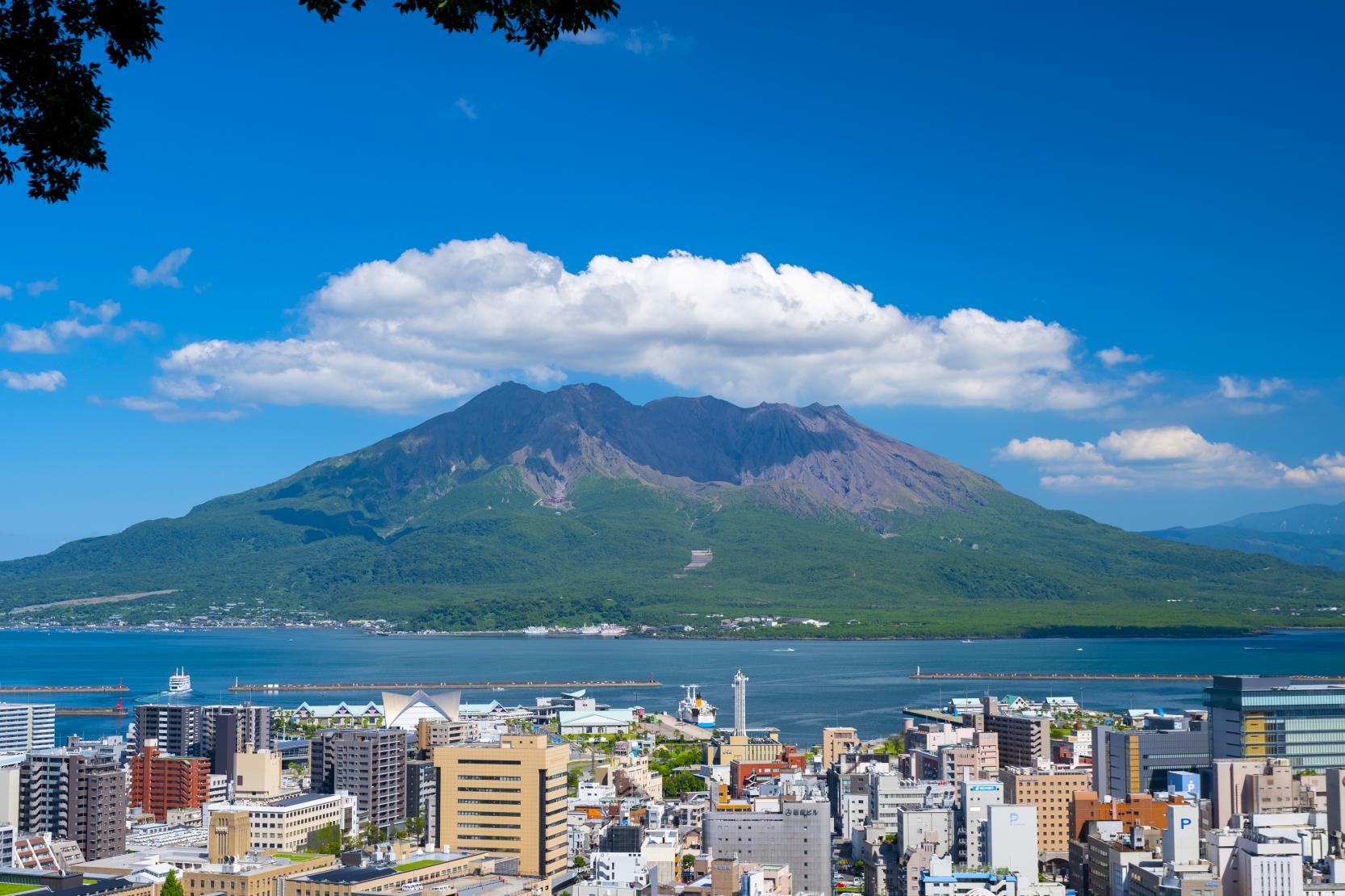
Mt. Sakurajima
© 鹿児島観光コンベンション協会
-
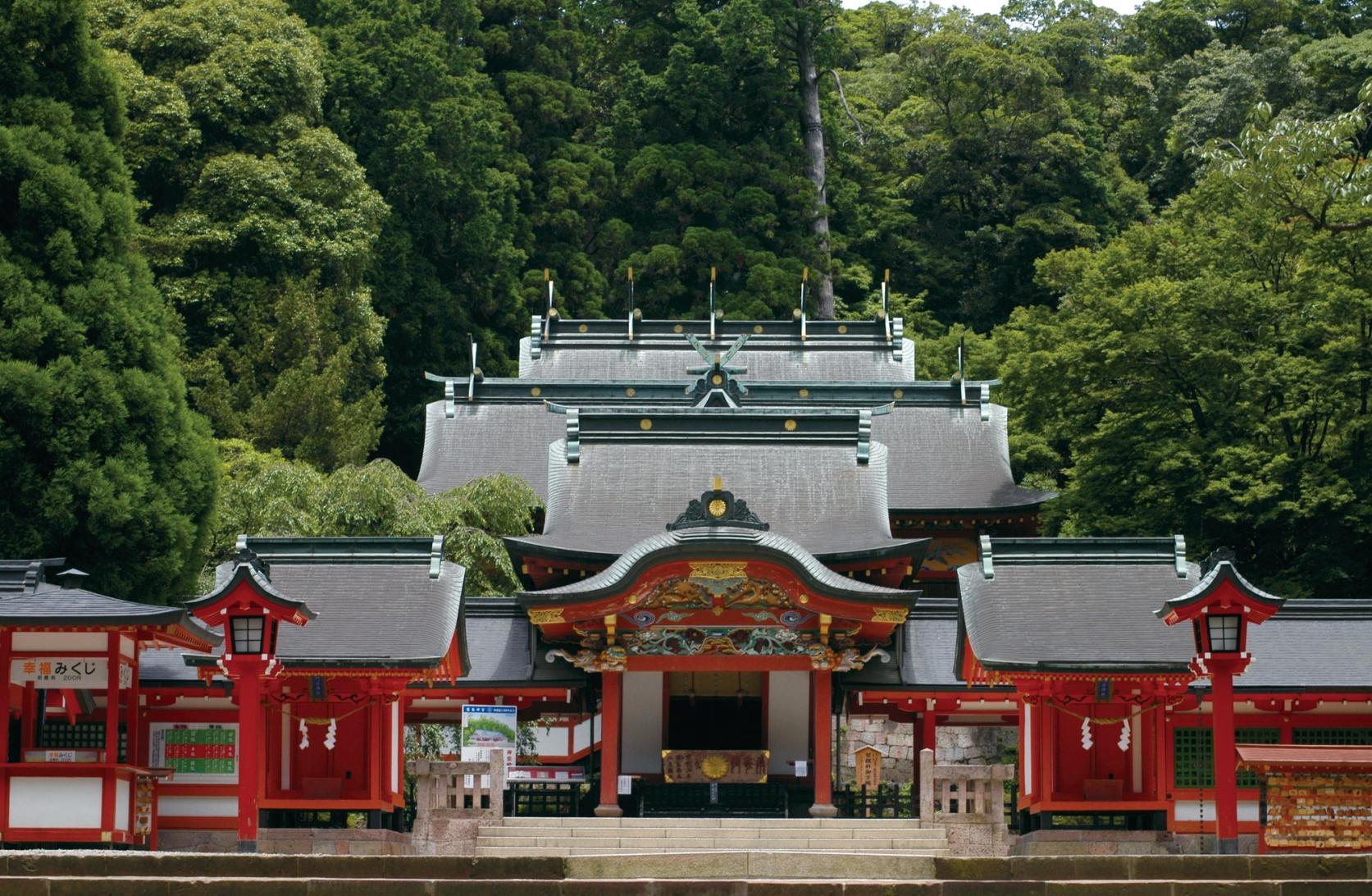
Kirishima-jingu
© K.P.V.B
-

Hot sand bathing
-
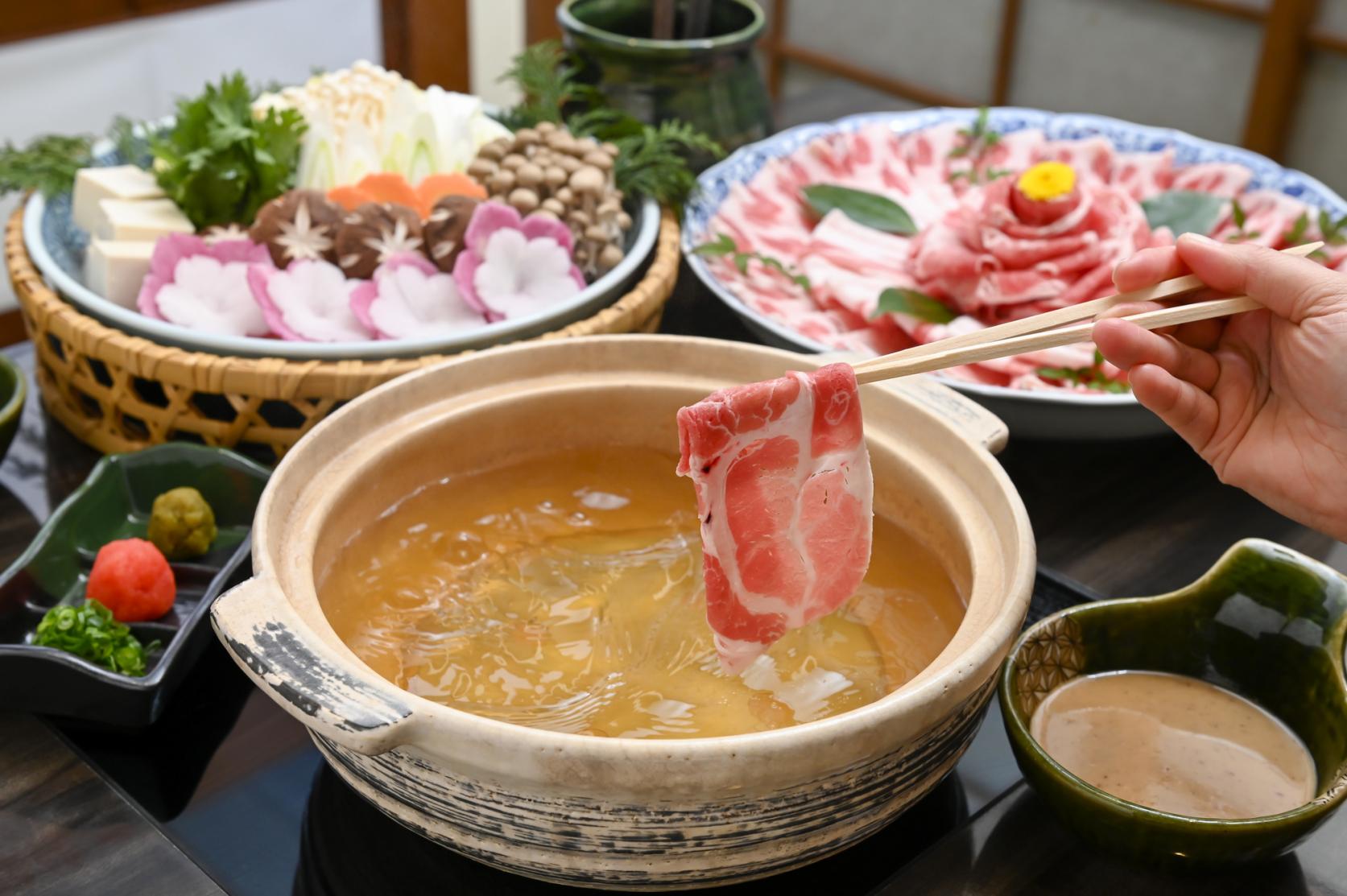
Kurobuta pork shabu-shabu (hot-pot cuisine)
©鹿児島市
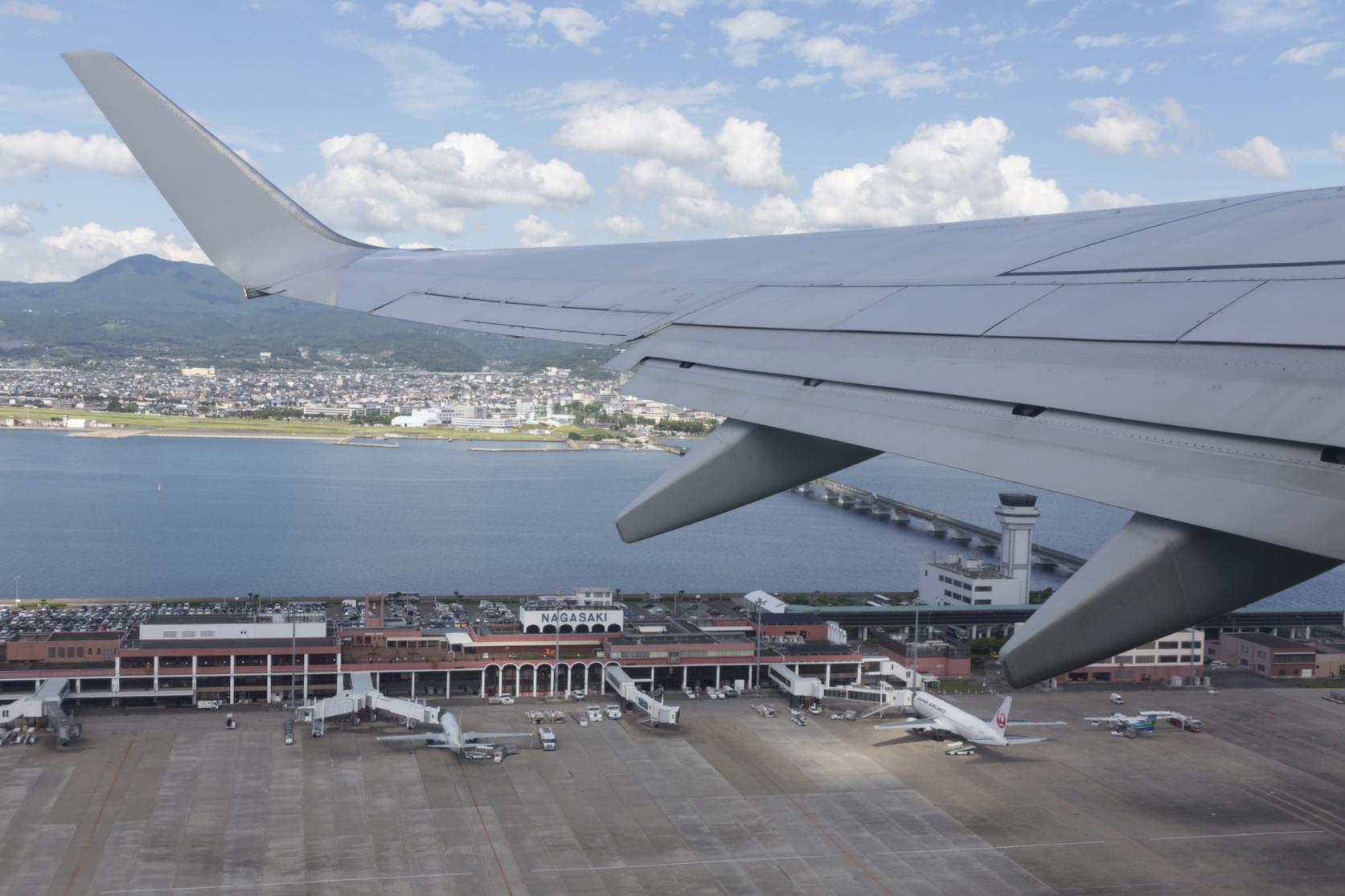
Accessing Nagasaki from Tokyo and Osaka
Flying is the recommended way to reach Nagasaki from Tokyo or Osaka; both cities have direct flights to Nagasaki Airport, so flying saves considerable time compared to rail travel.
From Tokyo (via Haneda Airport): Approx. 2 hours
From Osaka (via Osaka Itami Airport or Kansai International Airport): Approx. 1 hour 30 mins
 NEXT
NEXT